Knowledge Base

SEO
Engineering
Log

Technical deep dives into search algorithms, rendering performance, and the future of the web.

Latest Articles

How to Build a Zero - Spreadsheet SEO Workflow
Article

How to Build a Zero - Spreadsheet SEO Workflow

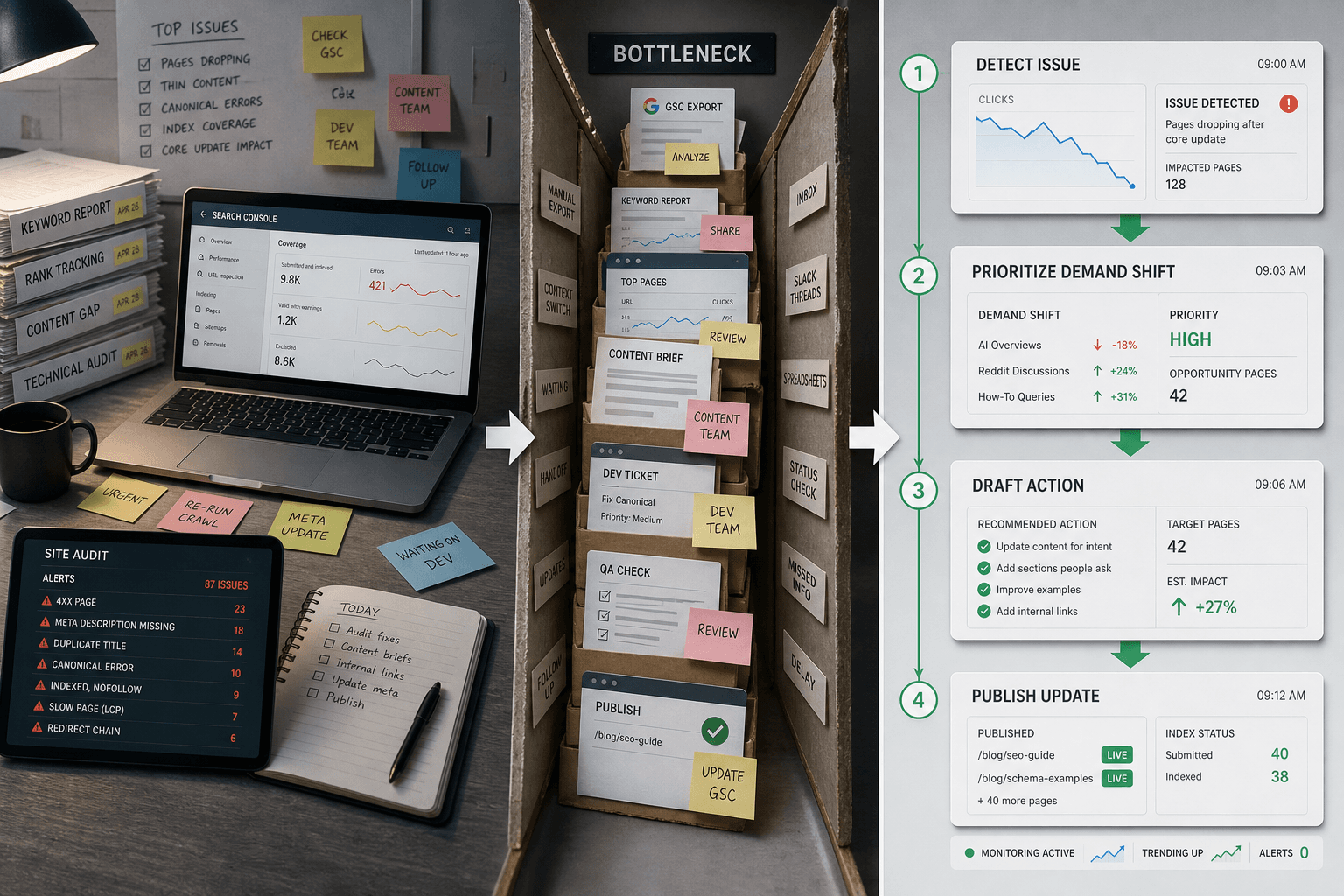
SEO teams do not need more spreadsheets. They need cleaner systems. If you are still copying rankings into sheets, checking pages by hand, and building reports manually, your process is slowing down growth. That is where seo automation helps. It replaces repetitive SEO work with connected workflows for tracking, monitoring, publishing, and reporting. In this guide, you will set up a practical automation stack your team can actually use. You will start with the tools, access, and rules you need. Then you will automate rank tracking and site checks, connect publishing and alerts, and build reporting that updates without constant manual work. Each step ends with a measurable result, so you can confirm the process is working before moving on. By the end, you should have a lean system that gives your team faster visibility, fewer errors, and more time to focus on strategy instead of admin.

Mygom Seo
Mygom Seo
8 Signs Your SEO Tool Stack Is Creating Work Instead of Saving It
Article

8 Signs Your SEO Tool Stack Is Creating Work Instead of Saving It

SEO teams rarely buy too few tools. They buy one more crawler, one more dashboard, one more writing assistant, and one more scheduler. Then the stack starts fighting itself. Data stops matching. Alerts pile up. Publishing gets delayed. Nobody owns the full workflow. That is tool sprawl, and it quietly drains output before teams notice the cost. This listicle breaks down the clearest symptoms that an SEO stack is doing more harm than help. Instead of comparing endless software features, it evaluates the operational warning signs that matter most: data consistency, workflow continuity, signal quality, publishing speed, and team ownership. Readers will see how duplicate data, disconnected workflows, alert fatigue, manual publishing gaps, and shadow processes show up inside real marketing teams. The goal is simple: help teams spot where their seo tools are creating friction, compare what healthy systems look like, and decide when a leaner seo automation platform or the best all in one seo tool makes more sense.

Mygom Seo
Mygom Seo
Technical SEO Alerts: Which Issues Need Same - Day Action—and Which Can Wait
Article

Technical SEO Alerts: Which Issues Need Same - Day Action—and Which Can Wait

A site audit tool should not turn every issue into a fire drill. But that is exactly what happens when teams get flooded with warnings, vague severity labels, and no clear response rules. You end up chasing noise, missing real risks, and wasting time on low-impact fixes. This tutorial shows you how to build a practical prioritization framework around a site audit tool so your team knows what matters now, what can wait, and what to ignore. You will start with a simple alert inventory, then add severity scoring, business impact rules, ownership, escalation paths, testing, and rollout steps. Along the way, you will learn how to use 24/7 monitoring, technical SEO monitoring, and smarter SEO alerts without overwhelming your team. The goal is simple. Fewer false alarms. Faster decisions. Better SEO operations.

Mygom Seo
Mygom Seo
7 SEO Tasks Founders Should Automate Before Hiring a Bigger Team
Article

7 SEO Tasks Founders Should Automate Before Hiring a Bigger Team

Small business SEO gets expensive fast when founders and lean teams try to do everything by hand. The problem is not effort. It is task selection. Some SEO work is low risk and highly repeatable, which makes it perfect for automation. Other work still needs a human brain because one wrong shortcut can create thin content, brand damage, or messy site structure. This listicle shows the 11 SEO and content tasks that are safest and most valuable to automate first. Each pick is ranked using the same lens: impact on traffic, time saved, setup difficulty, quality control risk, and how useful it is for early-stage SaaS teams with limited headcount. The goal is simple. Help founders automate the boring parts first, keep humans on strategy, and avoid the common trap of over-automating too early. Readers will get a clear shortlist, a side-by-side comparison, and a fast verdict on what to automate now versus later.

Mygom Seo
Mygom Seo
How to Turn One Keyword Into a Blog Post, Social Thread, and CMS Draft in a Single Workflow
Article

How to Turn One Keyword Into a Blog Post, Social Thread, and CMS Draft in a Single Workflow

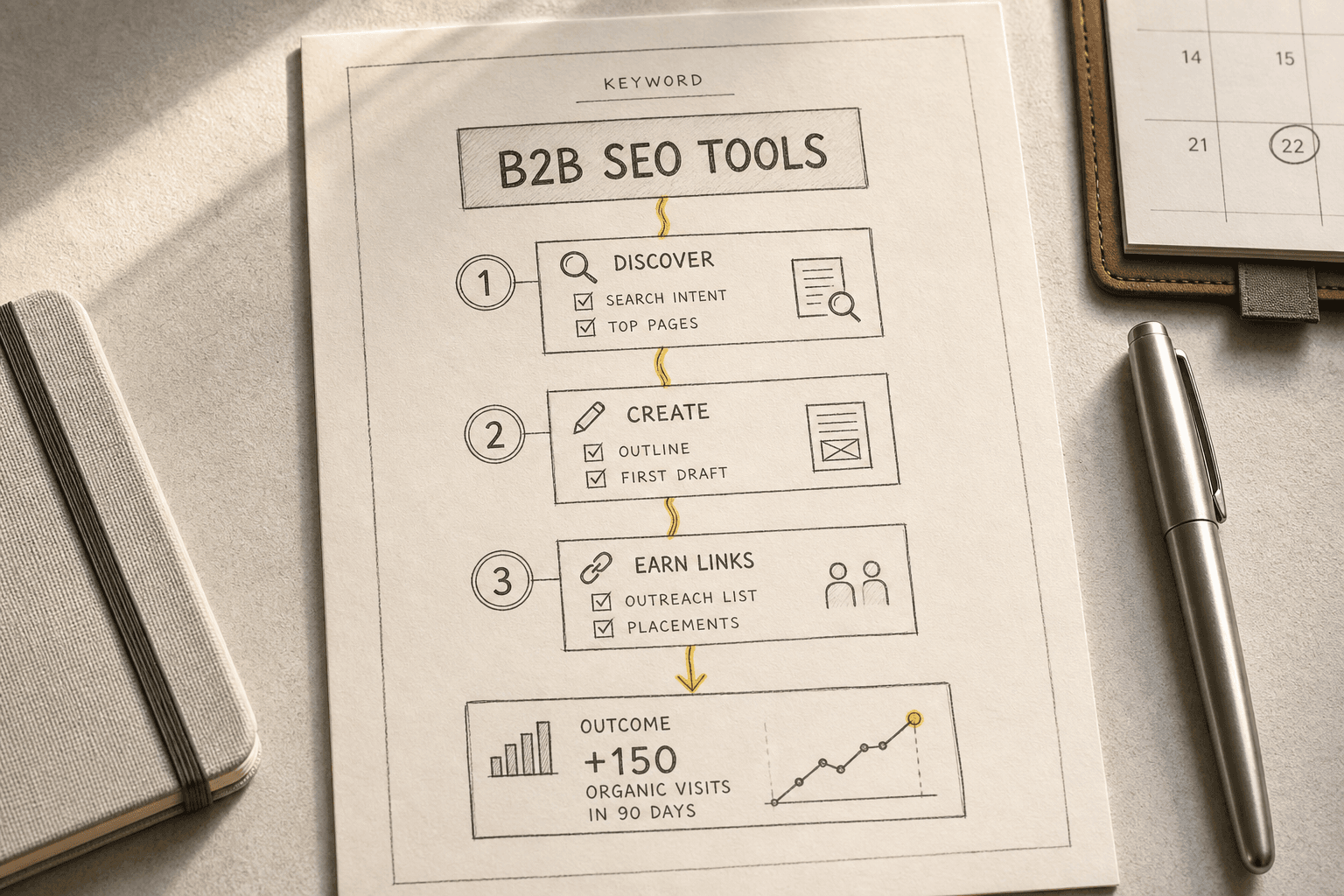
Social media automation sounds simple until you try to connect strategy, writing, approvals, scheduling, and publishing in one clean workflow. Most teams still do it manually. That means wasted time, inconsistent posting, and way too much copy-pasting between tools. In this tutorial, you’ll build a practical system that starts with one keyword and turns it into a multi-channel content engine. You’ll map the workflow, create reusable content inputs, use an ai social media manager to speed up drafts, add content repurposing rules for each channel, and connect cms publishing so your blog and social posts stay aligned. You’ll also learn how to test the workflow before it goes live, avoid common automation mistakes, and ship a setup your team can actually maintain. The goal is not more tools. It’s less busywork and faster publishing. By the end, you’ll have a working social media automation process you can reuse every time a new keyword enters your content pipeline.

Mygom Seo
Mygom Seo
Free SEO Checker vs Full Website Audit: What You Actually Need First
Article

Free SEO Checker vs Full Website Audit: What You Actually Need First

Choosing an seo audit tool sounds simple until a startup team hits the real question: is a fast scan enough, or is deeper technical analysis worth the extra time and cost? Early-stage teams usually do not need everything at once. They need the right level of insight for their current site, team size, and growth stage. That is where many buying guides fall short. They list features, but they do not explain when a lightweight website audit works and when a technical seo audit becomes necessary. This comparison fixes that. It evaluates both paths using clear criteria such as speed, depth, ease of use, reporting value, and best-fit use cases. It also highlights the common pain points teams run into with each option. By the end, readers will know whether a quick site audit can cover the basics or whether deeper diagnostics are the smarter move before traffic, content, and technical debt scale up.

Mygom Seo
Mygom Seo
Why ‘More Content’ Is the Wrong Fix for Flat Traffic
Article

Why ‘More Content’ Is the Wrong Fix for Flat Traffic

Content strategy is not failing because marketers suddenly forgot how to write. It is failing because too many SaaS teams treat publishing like progress. We see the same pattern again and again: teams ship blog posts, wait for traffic, then blame content when leads never show up. But the real problems are usually weaker and less visible. Distribution is an afterthought. Technical SEO creates friction. Internal links are thin or random. Keyword targeting is based on guesswork instead of clear search intent. That is where performance breaks. In this article, we take a contrarian view. We argue that most content strategy problems are really execution system problems. We share what we built, how we approach automated publishing and optimization, what we learned from client accounts, and why SEO traffic grows faster when content, technical SEO, keyword tracking, and distribution work as one engine. If your team keeps publishing but not compounding, this is the reset.

Mygom Seo
Mygom Seo
AI Agent Use Cases Demand AgentOps Not MLOps Today
Article

AI Agent Use Cases Demand AgentOps Not MLOps Today

AI in digital marketing is no longer just about faster copy, better ad targeting, or easier reporting. It is becoming operational. Agents now write, publish, monitor, and recover across real marketing workflows, and that changes the risk model completely. Too many teams still govern these systems like predictable software. We think that is the first mistake. Traditional automation followed fixed rules. AI agents do not. They make decisions across tools, content, and workflows with far less determinism. That is exactly why old MLOps thinking breaks down for modern SEO and content operations. In our experience building systems for SMB content teams, the real challenge is not generating output. It is controlling behavior, proving reliability, and adding guardrails without killing speed. In this article, we make the case for AgentOps as the missing operating model for agent-led SEO. We also show what we have built, what results matter, where skepticism is valid, and how teams can scale safely before agent sprawl becomes the next major marketing problem.

Mygom Seo
Mygom Seo
AI Overviews, GEO, and Organic SEO: What Actually Changes for SMB Teams
Article

AI Overviews, GEO, and Organic SEO: What Actually Changes for SMB Teams

AI Overviews are no longer a side feature. They are changing how users discover answers, how clicks get distributed, and how smaller SaaS teams need to think about search. We are seeing the shift firsthand across our own content systems, publishing workflows, and client campaigns. Pages that once relied on blue-link rankings alone now need clearer structure, stronger entity signals, tighter topical coverage, and better answer formatting to stay visible. In this update, we break down what changed, what it means for organic SEO, and where GEO fits in without the hype. We also share how we built our response inside our workflow, what signals we now prioritize, and the impact we are seeing for smaller teams that need practical moves now, not theory later. If you are wondering whether AI Overviews will reduce clicks, change content strategy, or force a full rewrite of your SEO playbook, this outline gives you the fast, useful version.

Mygom Seo
Mygom Seo