Free SEO Checker Tools in 2026: 15 Options Ranked by What They Actually Find
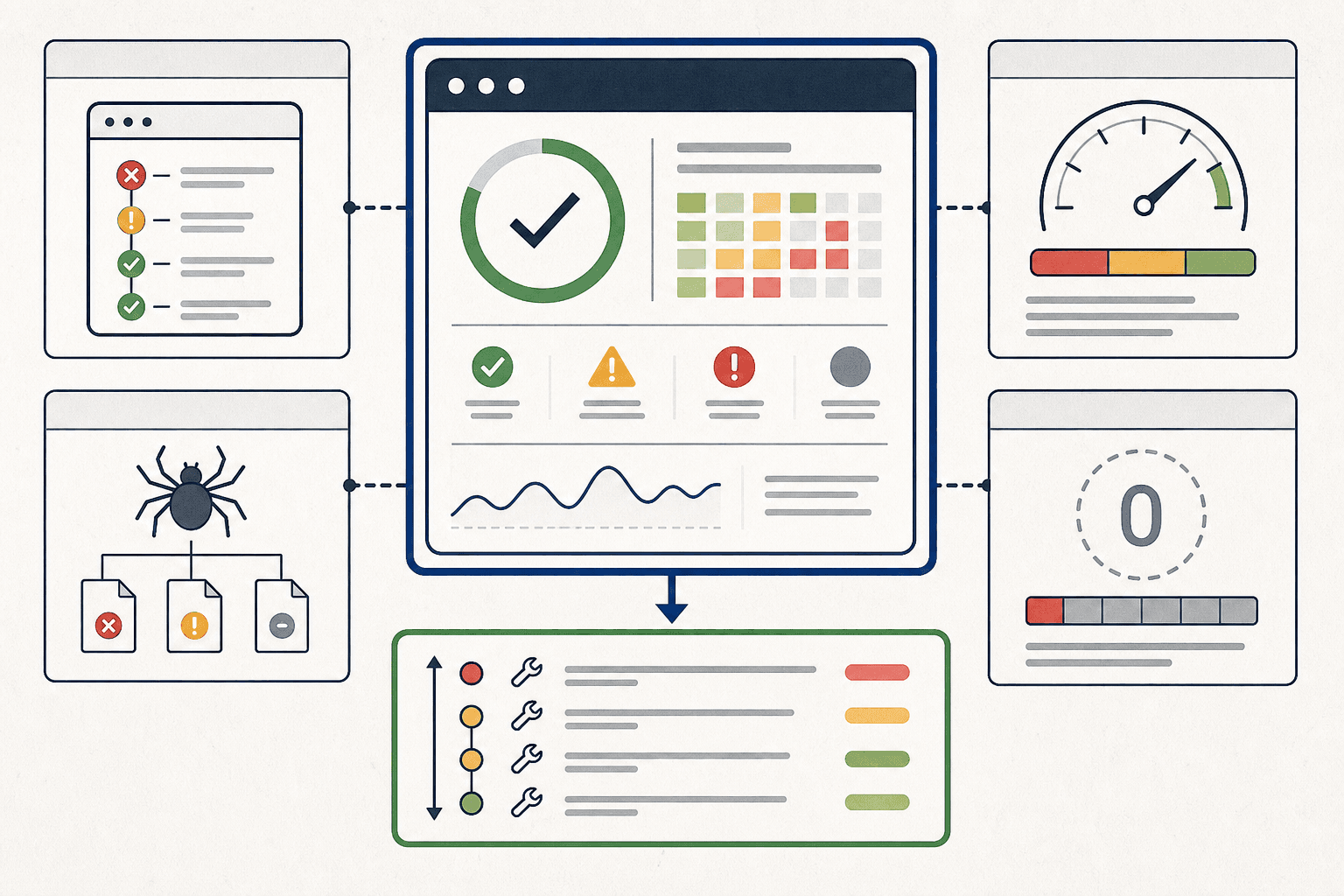
What is the best seo checker free tool? The short answer is: the one that finds quick wins fast. A strong seo checker free tool helps small teams spot broken pages, weak metadata, and missed ranking chances without adding software cost. According to 15 Best Free SEO Tools in 2026 (Tested & Ranked) | SerpNap, paid SEO platforms often start at $99. At the high end, costs can reach $449, data from 15 Best Free SEO Tools in 2026 (Tested & Ranked) | SerpNap shows. That makes free seo tools worth a serious look. This list covers the best options for audits, backlinks, and daily website checker tasks. Each pick uses the same growth-first criteria, so comparisons stay clean, fair, and useful.
How This SEO Checker Free List Was Evaluated
Evaluation criteria
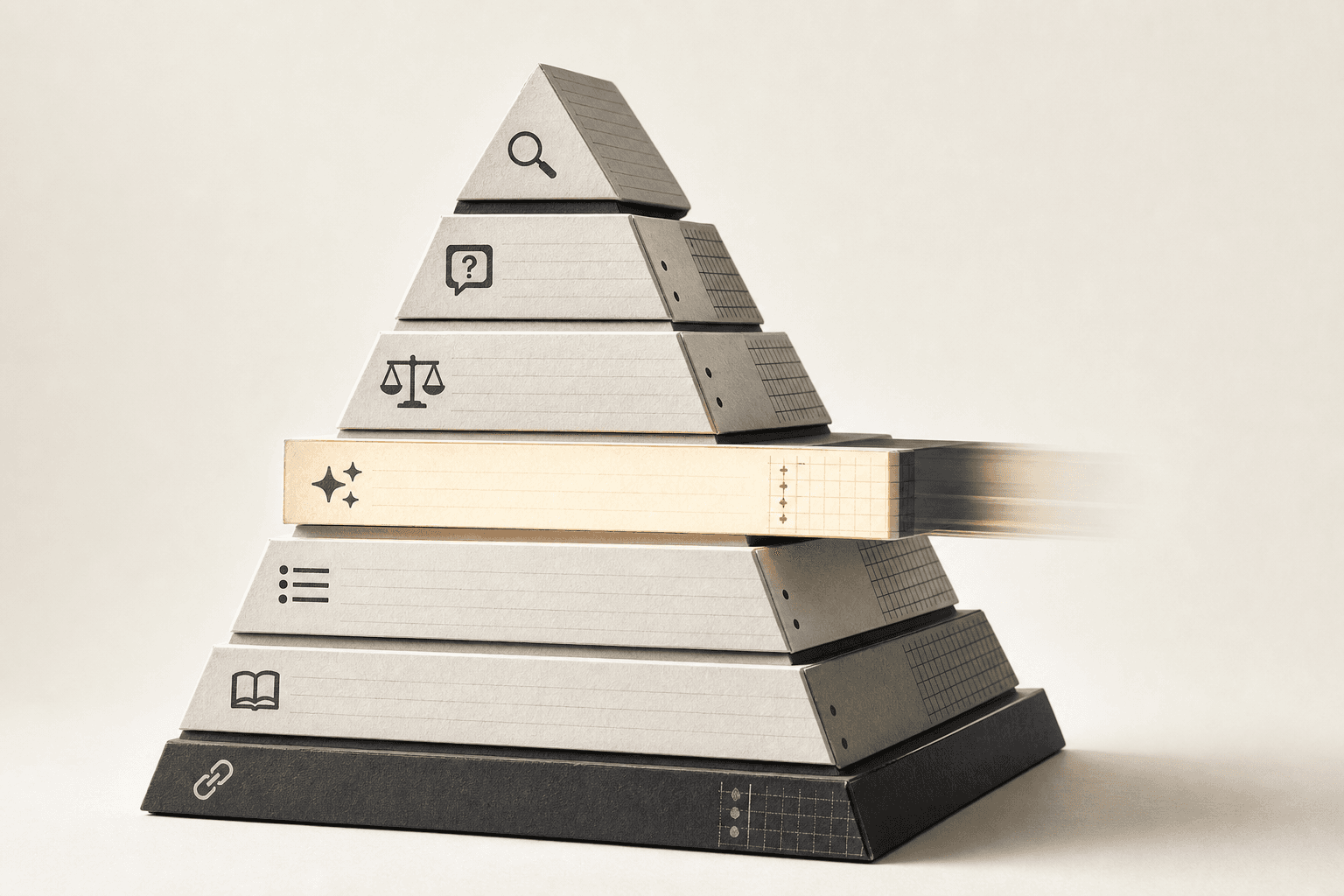
Each tool was scored on five consistent criteria. Those were audit depth, backlink data, usability, free limits, and upgrade pressure. Audit depth measured how well a website checker found technical issues. Backlink data mattered because link quality still shapes rankings, and Top 15 Backlink Checker SEO Tools (for 2025) notes that stronger backlink profiles can correlate with 67% higher rankings.
Who these tools fit best
The review also matched each option to a real team shape. Founders needed fast answers with little setup. In-house marketers needed cleaner reports and stronger workflow value. Lean content teams needed the best website checker for quick page checks, keyword gaps, and basic link review.
For example, a founder launching three landing pages does not need fifty charts. That team needs the next fix in plain English. A beginner will usually get more value from a website checker with guided recommendations, simple labels, and visible priorities. In practice, that makes beginner-friendly tools the best fit for first-time users.
For a visual walkthrough of this process, check out this tutorial from Grace Leung:
How free plans were compared
Free plans were compared by real output, not by headline claims. The team checked how many pages, reports, or queries each free tier allowed before friction appeared. Are free SEO tools accurate? Often, yes for surface issues, but limits can reduce depth. For example, [Website SEO Checker [Free Tool] → SEO Review Tools](https://www.seoreviewtools.com/seo-checker) shows 0% usage credits before use, which highlights how caps shape access.
3. Best SEO Checker Free Tools for All Around Use
1. Google Search Console
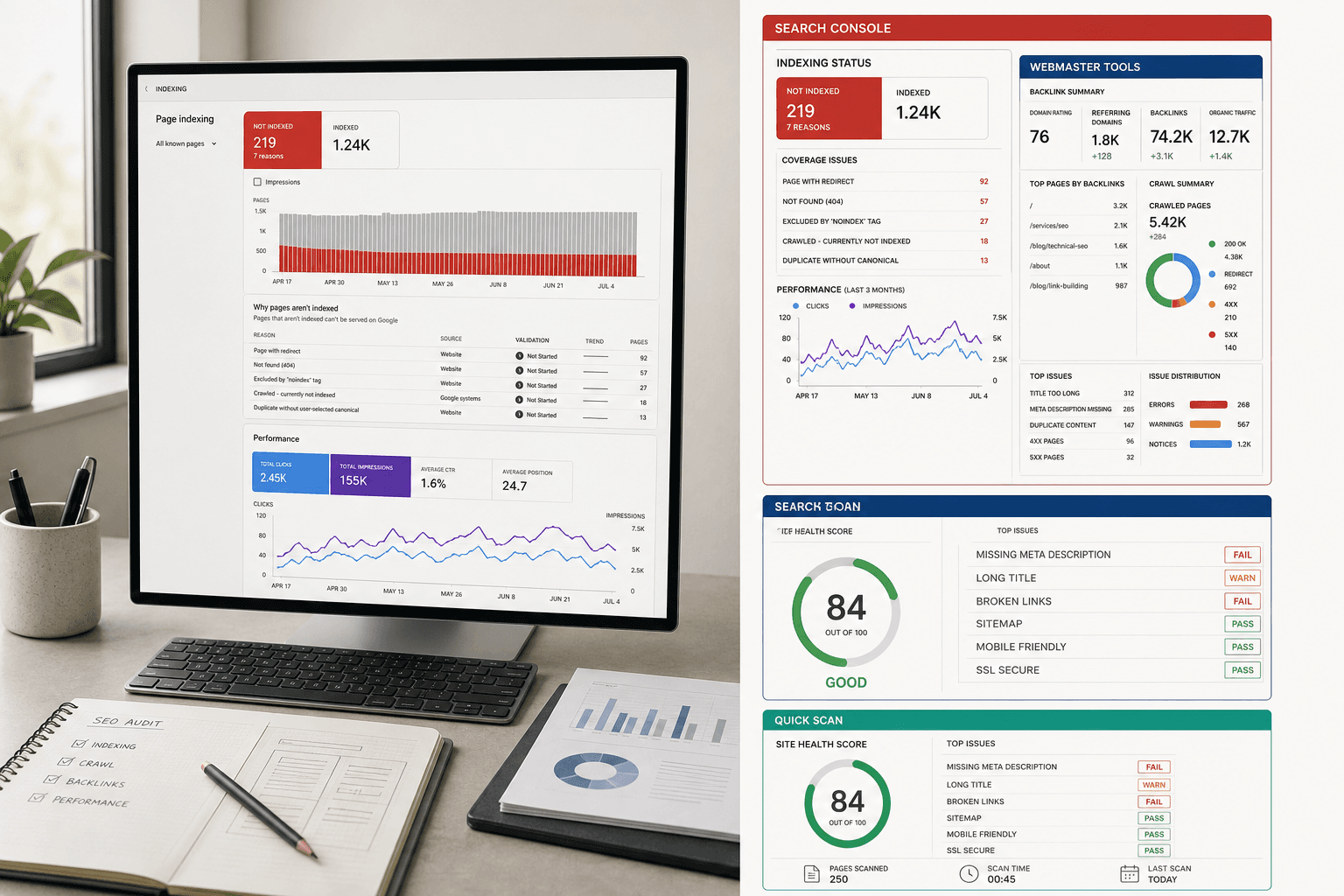
Google Search Console is the strongest no-cost baseline. It shows how Google sees a site. That makes it the default starting point for most teams.
What it does best: indexing, query data, and page issue tracking. For example, it can show which pages get impressions but few clicks. That helps teams spot weak titles fast.
Standout free feature: Performance and Indexing reports in one place. Those reports connect real search engine demand with crawl and coverage issues. Few free SEO tools match that direct view from Google itself.
Biggest limit: it does not act like a full technical crawler. It also gives limited competitor or backlink detail compared with broader platforms.
Best fit: in-house teams, founders, and publishers managing active sites. It is also the best free answer to, "Can I audit my website for free?" Yes - at least for indexing, usability, and core visibility checks.
2. Ahrefs Webmaster Tools
Next comes Ahrefs Webmaster Tools. It offers more depth for site health and links than many free options. That makes it a high-value second step after Search Console.
What it does best: technical audits plus backlink monitoring. For example, a small brand can scan broken pages, then check which lost links point to them. That turns a vague problem into a fix list.
Standout free feature: Site Audit paired with backlink data. Research from Top 15 Backlink Checker SEO Tools (for 2025) highlights Ahrefs as a strong free link-checking option. SerpNap also ranks it among the top free SEO tools for practical audits and site reviews 15 Best Free SEO Tools in 2026 (Tested & Ranked) | SerpNap.
Biggest limit: the free plan stays inside Ahrefs' account limits. It is useful, but not fully open-ended.
Best fit: lean marketing teams that want a better #websiteaudit flow without paying first. It suits teams that need both crawl insights and a best website checker for link health.
3. SEOptimer
SEOptimer takes the simpler route. It is built for fast checks, clear scores, and easy-to-read reports. That makes it useful when speed matters most.
What it does best: quick page-level scans for non-specialists. For example, a founder can paste in a homepage URL and get a plain-English review in minutes.
Standout free feature: instant reporting across core on-page areas. According to [Website SEO Checker [Free Tool] → SEO Review Tools](https://www.seoreviewtools.com/seo-checker), some websites can miss key optimization gains by 22%, which shows why simple scan tools still matter.
Biggest limit: it lacks the deeper ownership-level data of Google Search Console. It also cannot match Ahrefs for link depth.
Best fit: quick checks, pitch prep, and early-stage reviews. It works well alongside Free community tools when teams want a lightweight seo checker free stack.
4. Best SEO Audit Tool Picks for Technical Checks
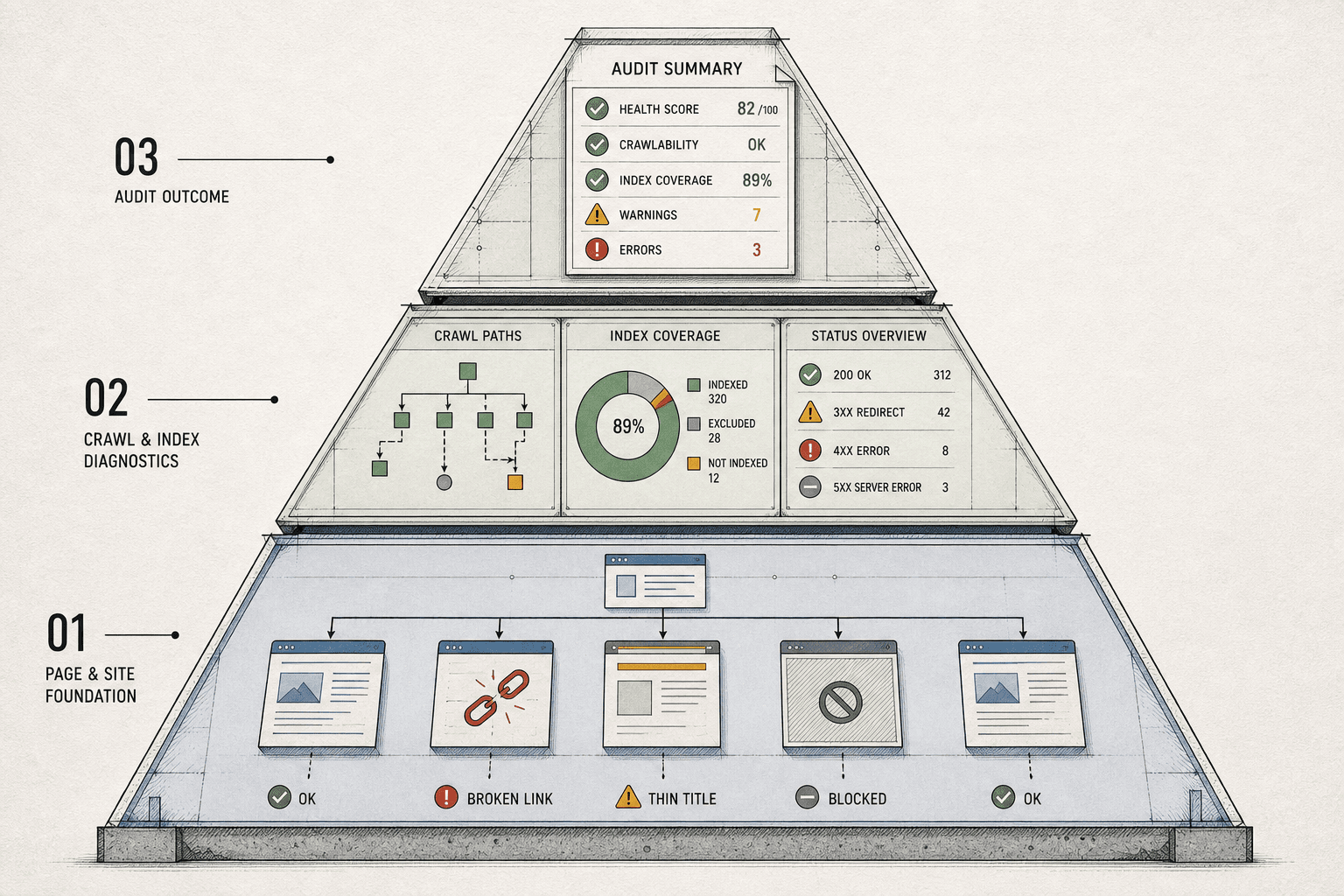
Free site audit tools are often enough for small websites. For example, a ten-page service site can spot broken links, thin titles, and blocked pages without paid software. Larger sites usually need deeper crawl controls and cleaner exports. That is where a stronger seo audit tool starts to matter.
4. Screaming Frog SEO SpiderBest use case:Deep technical crawls for small to mid-size sites.
Screaming Frog is the strongest pick here for raw crawl depth. It works like a search engine bot on a laptop. For example, it can trace redirect chains, duplicate titles, orphan clues, and broken canonicals in one crawl. That makes it a strong fit when lighter tools miss structural problems.Top free capability:The free version crawls up to 500 URLs and exposes key technical fields, according to SerpNap.Key drawback:The interface feels dense at first. It gives power, not polish.Ideal user:In-house marketers, SEO freelancers, and founders who want a hands-on best website checker for crawl issues.
5. Semrush Site AuditBest use case:Guided technical reviews with polished reporting for teams.
Semrush sits in the middle for a reason. It is the second-strongest overall pick, but it feels more guided than Screaming Frog. For example, a lean team can run a project, review issue themes, and share reports without sorting through dozens of raw columns. This separates it from deep crawl tools and pushes it toward dashboard-style audits.Top free capability:The platform gives limited audit access with clear issue labels and prioritization, as noted by The Frank Agency.Key drawback:Free limits arrive quickly on larger sites. Some fixes also sit behind paid tiers.Ideal user:Small marketing teams that want cleaner reporting and action steps.
6. Bing Webmaster ToolsBest use case:Free technical monitoring inside a lighter dashboard.
Bing Webmaster Tools is less aggressive than a desktop crawler. Still, it covers the basics well. It includes site scans, index views, keyword data, and crawl controls inside one free interface. For smaller brands, that can be enough before moving into heavier tools or even broader Free community tools.Top free capability:Its Site Scan and index reporting give practical alerts at no cost, based on SerpNap.Key drawback:It is not the best choice for deep forensic audits.Ideal user:Founders and lean teams who want a simple website checker tied to real search engine data.
5. Best Backlink Checker and Content Insight Tools
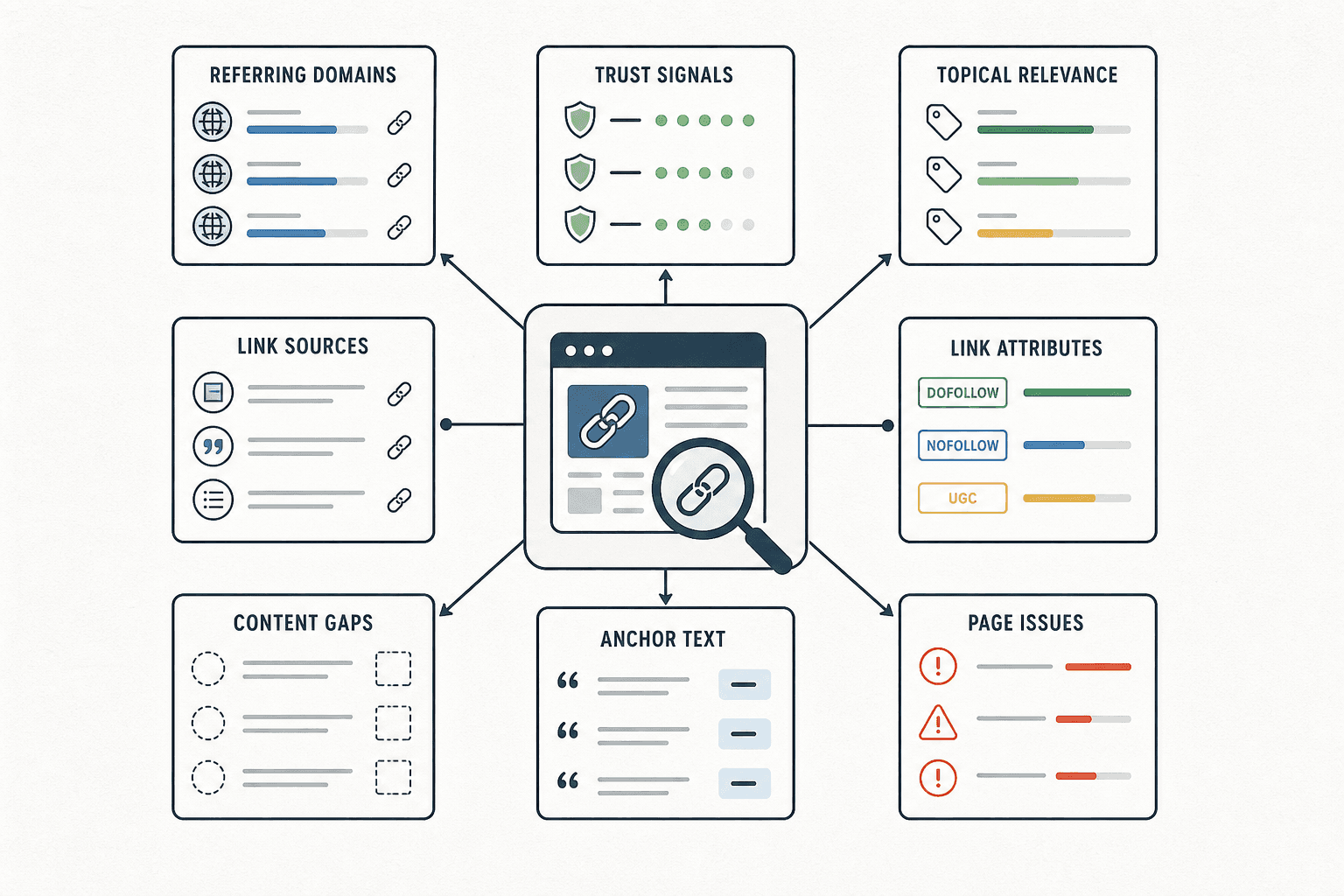
7. UbersuggestUbersuggest: Fast keyword ideas plus simple link snapshots.
It works best for teams that want one screen for keywords, top pages, and backlink trends. For example, a startup can plug in a rival domain and quickly see which blog posts attract links. That makes content planning feel less like guessing and more like reading the scoreboard.
Best For
Lightweight research, content planning, and quick competitor scans.
Pros
- Combines keyword ideas with basic backlink checker views
- Shows top-performing pages and related terms fast
- Simple layout suits lean teams using free seo tools
Cons
- Free limits appear quickly during repeat research
- Link depth is lighter than dedicated enterprise databases
8. Moz Free Domain AnalysisMoz Free Domain Analysis: Reliable domain-level authority and link snapshots.
Moz stays useful because it answers a simple question fast: how strong does this site look from the outside? A marketer can compare two competitors, review linking domains, and gauge whether a target page has real authority. Similar to a website checker dashboard, it favors quick judgment over deep crawling.
Best For
Domain comparisons, authority checks, and top-level backlink reviews.
Pros
- Clean snapshot of linking domains and ranking signals
- Helpful for prospecting and outreach prioritization
- Easy starting point for teams new to link analysis
Cons
- Less suited for deep page-by-page diagnostics
- Free access gives a narrower slice of the full platform
9. SEO Review ToolsSEO Review Tools: The surprising runner-up for many small checks.
This platform stands out because it offers many narrow tools instead of one giant workspace. For example, a founder can run a page test, switch to a backlink checker, then check metadata without changing systems. According to SEO Review Tools, one featured metric reaches 20140%, which shows how aggressively the platform highlights performance swings.
Best For
Readers who want many fast checks without committing to one suite.
Pros
- Broad menu of page-level diagnostics and mini tools
- Good fit for quick spot checks and one-off reviews
- Works well as a flexible seo checker free option
Cons
- Interface can feel fragmented across many utilities
- Results need interpretation more than guided platforms do
Research from SEO Review Tools also shows a 25% figure on the page, reinforcing that the platform mixes utility with active offers. For backlinks alone, Moz is usually the best free pick for clarity. For variety, SEO Review Tools wins readers who prefer many quick checks.
SEO Checker Free Comparison Table and Verdict
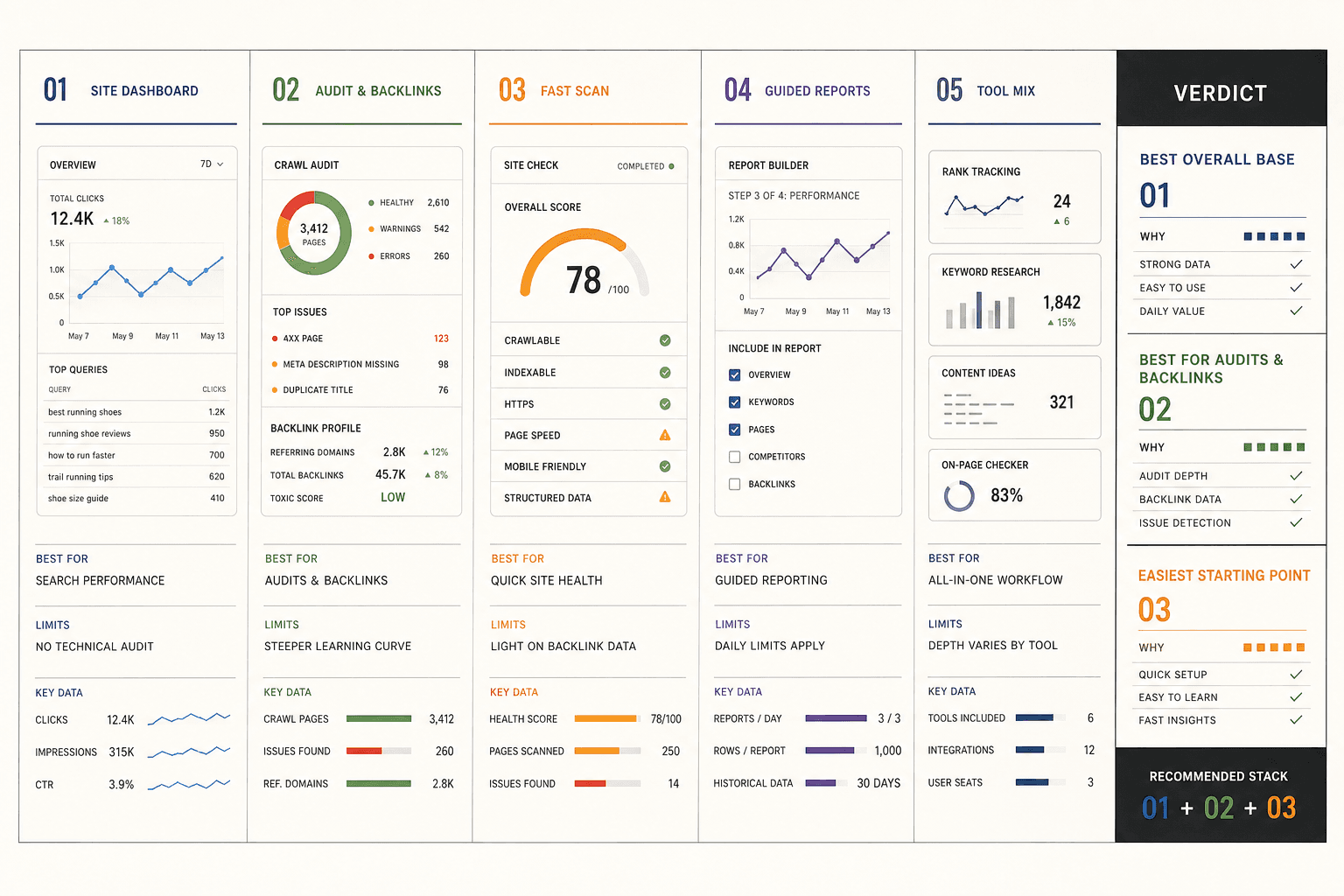
- Google Search Console — Best for: Search performance basics · Free limits: Ongoing, site-owned data only · Audit strength: Moderate · Backlink data: None · Easiest starting point: Yes
- Ahrefs Webmaster Tools — Best for: Balanced audits and link insights · Free limits: Limited to verified sites · Audit strength: Strong · Backlink data: Strong · Easiest starting point: Yes
- SEOptimer — Best for: Fast website checker scans · Free limits: Limited free reports · Audit strength: Light · Backlink data: None · Easiest starting point: Very easy
- Semrush — Best for: Guided audits and reporting · Free limits: Tight daily limits · Audit strength: Strong · Backlink data: Moderate · Easiest starting point: Moderate
- SEO Review Tools — Best for: Quick free seo tools mix · Free limits: Tool-by-tool limits · Audit strength: Light to moderate · Backlink data: Light · Easiest starting point: Easy
The verdict is simple. Google Search Console is the best overall base. It gives the clearest view of visibility and site health. Ahrefs Webmaster Tools wins for technical audits and backlink data. SEOptimer is the easiest starting point for beginners who want a fast websiteaudit without setup friction.
The bigger lesson is this: free seo tools are enough to build early traction. They can surface crawl issues, weak pages, and missed search demand without adding cost. But once reporting gets messy, handoffs slow down, or checks start eating team time, the upgrade decision gets obvious. Growing teams should pay for speed, deeper data, and automation - not just more dashboards.
That is the practical cutoff for any seo checker free workflow. Start lean. Fix what matters. Upgrade only when the bottleneck becomes execution. For teams that want simple tools and shareable outputs, Try It Free.