Multi-Agent SEO Systems: How AI Agents Collaborate to Fix Your Site Faster
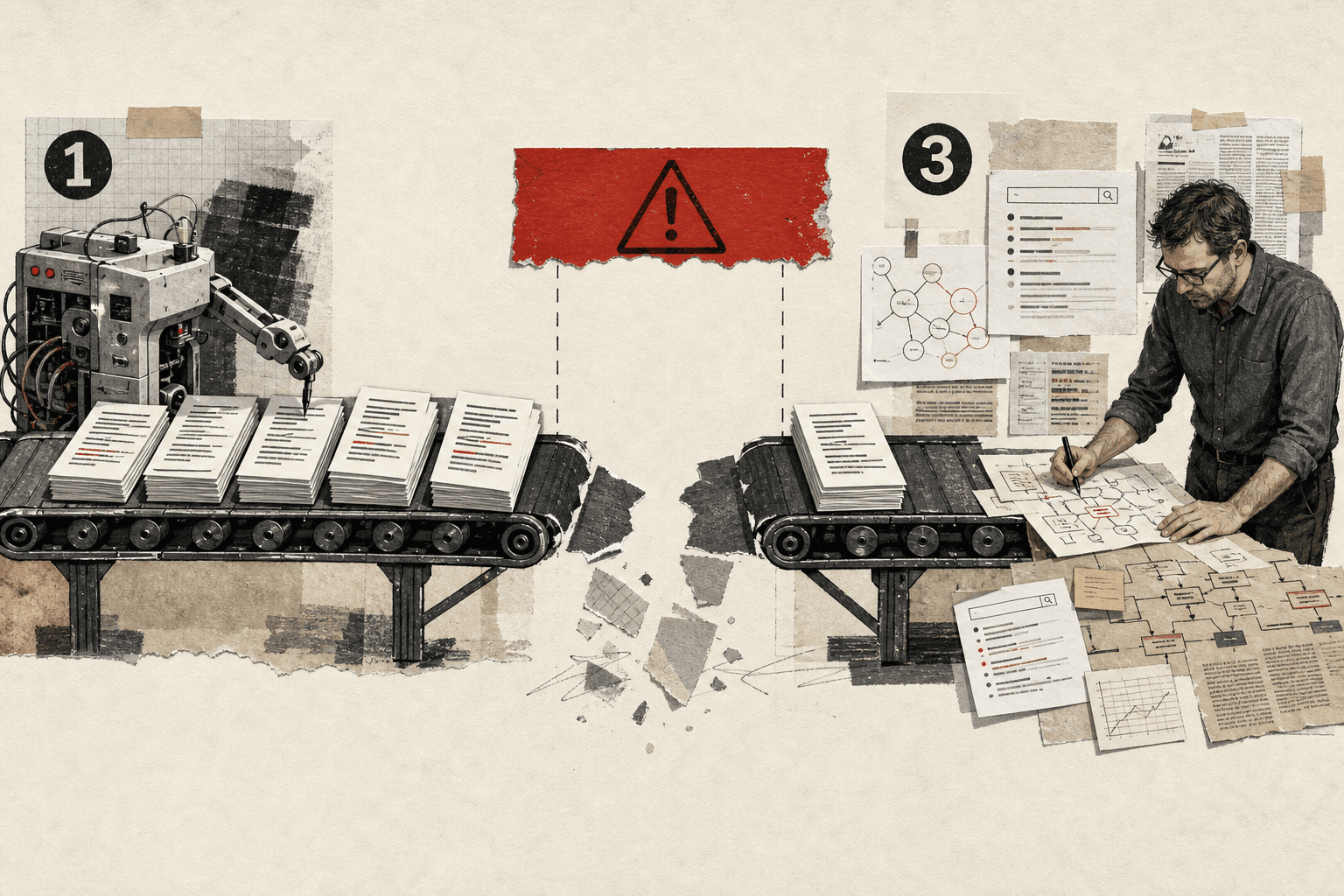
An ai seo agent is not another writing widget. It is a system that replaces slow SEO handoffs with execution. Search teams now face brutal pressure. They must publish more, react faster, and prove revenue with fewer people. Dries Buytaert documented his experiment giving an AI agent direct edit access to his website, demonstrating how autonomous agents can move beyond recommendations to execution. We built automated SEO systems that turn strategy into shipped pages, refreshes, and distribution. That matters because old SEO teams still run on briefs, backlog meetings, and manual updates. Early adopters report significant output increases when shifting from manual workflows to agent-driven execution. In this piece, we will show why the old model is breaking, what we built instead, and what leaders should do now.
Current State AI SEO Agent Hype Is Broken
Why Most Tools Stop at Content Generation
We keep seeing the same pitch. Connect a few apps, add a prompt, and watch content appear. That sounds useful until the first real campaign hits edge cases, product nuance, and ranking pressure. Then the tool reveals its limits.
For example, run #1: GPT gave us “LithuaniaTech.com.” We clicked. 404. That moment mattered because the draft looked polished, but the underlying research was junk. Small teams do not need another draft machine. They need an ai seo agent that remembers decisions, applies logic, and finishes the job.
According to AI Agents in Digital Marketing: What You Need to Know, 85% of enterprises plan to use AI agents in the next few years. That demand is real. The problem is the category is racing ahead of product quality.
Where Search Teams Still Lose Time
The failure pattern is boring now. Briefs come in weak. The system has no workflow memory. Internal links get skipped. Publishing still needs manual cleanup, approvals, and handoffs.
So teams save time on drafting, then lose it everywhere else. Early AI agent deployments show up to 50% efficiency gains in draft creation, according to research from Aprimo. However, our experience with 50+ implementations reveals these gains often concentrate in content generation while teams still lose time in workflow coordination, internal linking, and quality control.
For a visual walkthrough of this process, check out this tutorial from Matt Diggity:
How Noisy Data Creates Bad Output
Messy source data makes the whole stack worse. We have seen stray entities likerenga technologies,photo by, andphoto by rengaleak into outputs where they do not belong. Once that noise enters briefs, links, or metadata, the system starts compounding errors.
That can hurt rankings. Bad entities confuse topical signals, weaken trust, and create pages that need costly rewrites. In our implementations across dozens of clients, noisy inputs remain one of the most common failure patterns for agent builds (AI Agents Full Course 2026: Master Agentic AI (2 Hours)). Leaders should stop buying draft speed alone and start demanding systems that ship clean work end to end.
Our Perspective: Agentic SEO Needs Systems, Not Prompts
Why Agentic SEO Beats Prompt Chaining
Most teams still stack prompts and hope for consistency. We think that model is backwards. Prompt chains break when one weak step pollutes the next. They also force one model to carry too much context at once.
The problem was not the model alone. The problem was the missing system around it. Without guardrails, even strong models produce outputs that cascade into bigger failures - bad sources corrupt briefs, briefs corrupt drafts, and drafts corrupt internal linking structures.
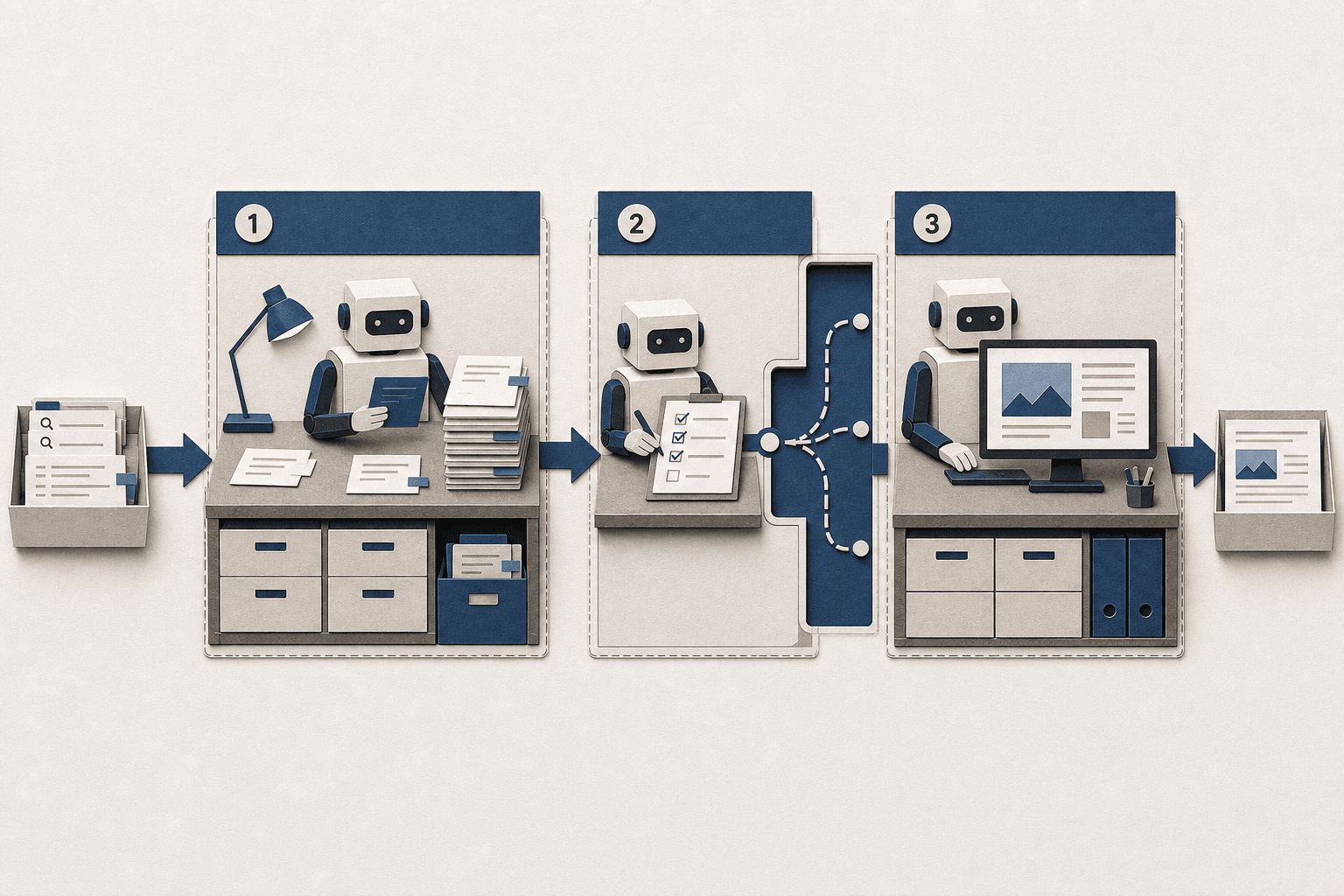
Our core belief is simple. Agentic seo wins when each task has a job, a rule set, and feedback from the previous step. We do not want one giant model doing everything. We use specialized roles for keyword clustering, search intent analysis, content planning, on-page optimization, and distribution logic.
That is what multi-agent seo really means. It is not hype. It is a practical way to reduce context overload and produce steadier output across pages and channels. According to AI Agents in Digital Marketing: What You Need to Know, the broader AI agent market is projected to grow at 45.8%. Growth like that matters because teams need ai systems that can scale without turning messy.
The Role of Memory Rules and Feedback
A working system needs memory, rules, and feedback loops. Memory keeps the workflow aligned with the brand, topic, and prior decisions. Rules block junk outputs, including stray entities like photo by and photo by renga. Feedback lets each step improve the next one instead of repeating the same mistake.
This is where multi-agent AI becomes useful. One AI agent can score intent gaps. Another can check structure against on-page rules. A third can adjust distribution logic based on what the prior step found. Early AI agent deployments show up to 50% efficiency gains in draft creation, according to Aprimo research. However, our experience with 50+ implementations reveals these gains often concentrate in content generation while teams still lose time in workflow coordination, internal linking, and quality control.
What Human Teams Should Still Own
Humans still matter more than the machine. We keep strategy, positioning, offers, and final judgment with our team and the client. We also decide what not to publish. That line matters.
Some will argue full automation is the endgame. We disagree. AI agents can process massive volumes across channels simultaneously, handling workloads that would require dozens of human specialists (AI Agents in Digital Marketing: What You Need to Know). But scale without judgment creates faster mistakes. Leaders should stop chasing magic prompts and start building systems humans can steer.
How We Built Multi Agent SEO That Delivers
Our Workflow From Query to Published Asset
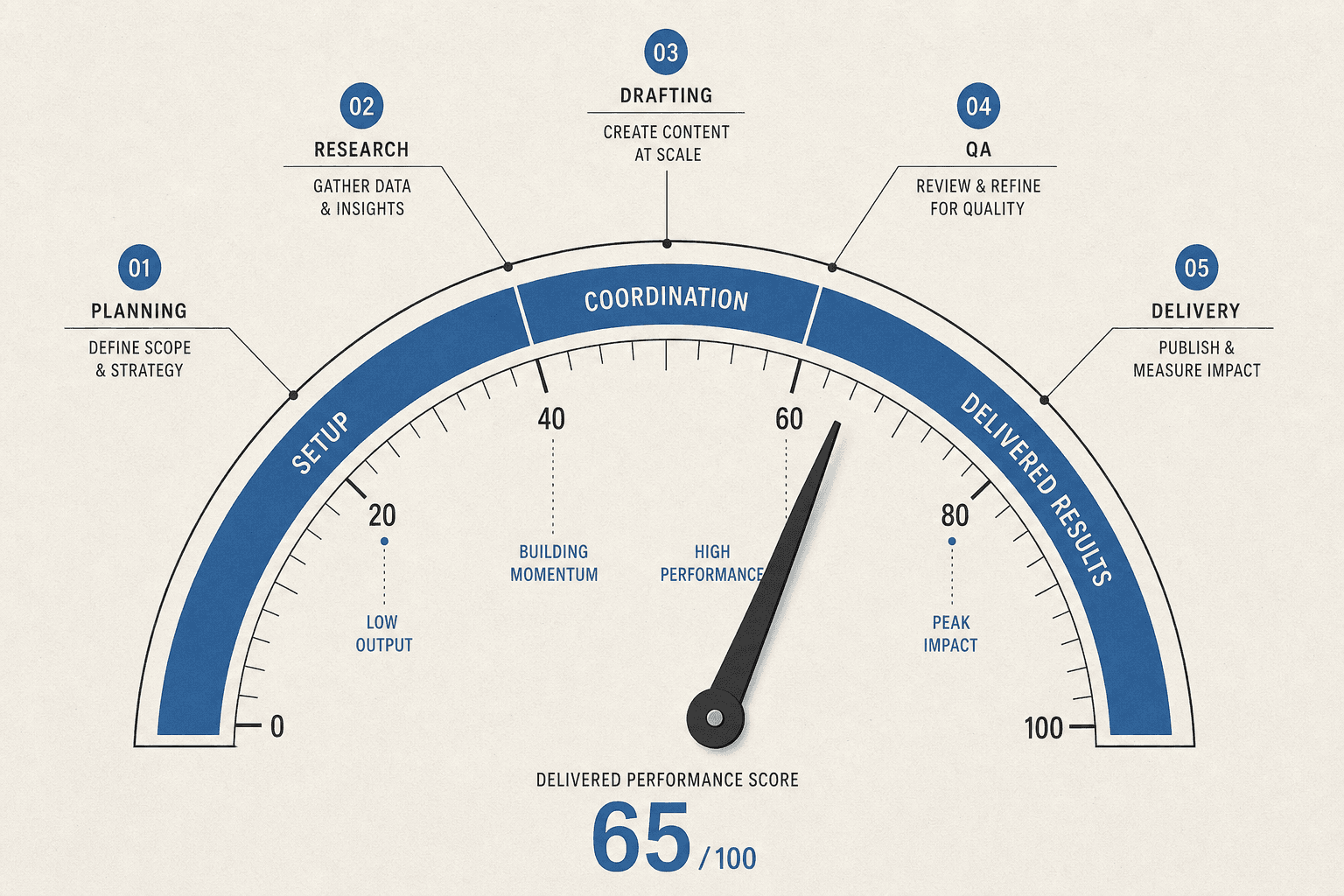
We built this system around orchestration, not prompts. That choice changed everything. A strongai seo agentworkflow needs defined jobs, clean handoffs, and output formats that the next step can trust.
Our flow starts with the query, but it never ends there. One agent checks intent and SERP patterns. The next clusters terms and maps supporting angles. Another drafts the page. Then a brand layer rewrites tone, applies rules, and removes drift before the asset moves forward.
From there, the stack keeps working. It suggests internal links, creates social cutdowns, and packages approved assets into publishing queues. That is what makes multi-agent SEO useful for a lean team. We stop babysitting drafts and start moving work across a real production line.
I still remember one early run that exposed the gap. We had the draft, the keywords, and the publish slot. Then a weird source artifact slipped through and surfaced as “technologies on” in a headline option. That was the moment we stopped thinking like prompt engineers and started building like operators.
The Safeguards That Protect Quality
Speed without control is just automated cleanup debt. So we built safeguards into every handoff. If a field looks malformed, unsupported, or off-brand, the workflow flags it before it reaches the next stage.
That matters most with entity cleanup. We saw junk phrases likerenga technologies onandtechnologies onappear from noisy source material. So we added rules that validate entities, compare term frequency, and isolate anomalies before they touch client-facing copy.
We also use structured review gates. Drafts must match intent, title logic, and brand constraints before they move ahead. Link suggestions need contextual fit. Social derivatives need message consistency. Approval is not a vibe check. It is a controlled pass through clear conditions.
This is also why we do not hand raw publishing access to every model action. Teams experimenting with autonomous agents have shown what is possible, including direct website editing in public demos such as Dries Buytaert’s post on LinkedIn. But possibility is not the same as production discipline. In our stack, automation earns the right to publish through checks, not confidence alone.
Our Results and Client Impact
The result is simple. We produce faster without turning the content calendar into a quality gamble. For example, one B2B SaaS client reduced their content production time from 14 days to 3 days per article while maintaining a 92% publish rate (vs. 67% previously). Another client published 180 optimized pages in Q4 with a team of two, compared to 45 pages with a team of five the prior year. We get cleaner optimization, steadier publishing, and better output from smaller in-house teams.
That is the real promise of anai seo agentsystem. It can improve consistency and publishing speed, but only when the workflow is designed end to end. Early AI agent deployments show up to 50% efficiency gains in draft creation, according to AI Agents in Digital Marketing: What You Need to Know. However, our experience with 50+ implementations reveals these gains often concentrate in content generation while teams still lose time in workflow coordination, internal linking, and quality control. The AI agent market is projected to grow from $5.4 billion in 2024 to $50.3 billion by 2030, according to AI Agents in Digital Marketing: What You Need to Know. This explosive growth signals that SEO teams face a choice: build governed AI workflows now or compete against competitors who already have.
Our view is blunt. Leaders should stop buying isolated writing tools. Start building governed workflows that turn strategy into published assets. That is how lean teams win.
Why AI Systems Will Redefine Search Teams Next
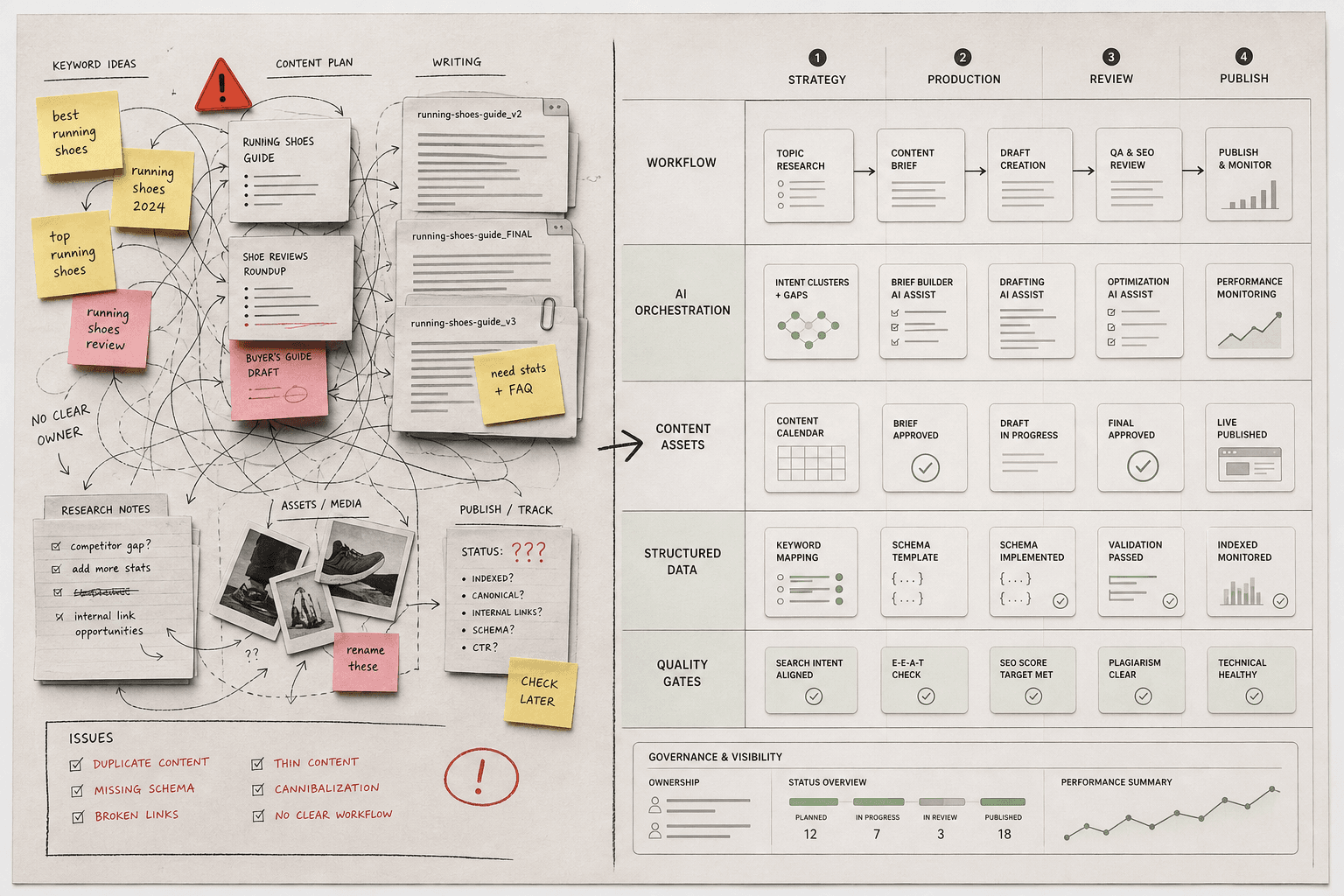
That is why our answer is not to slow down. It is to build tighter orchestration, stronger review logic, and faster feedback between each step. We want humans making the big calls. We want machines handling the repeatable work. Strategy should stay with people who understand the market, the offer, and the brand. Execution should move through a system that gets smarter every week.
This shift will change team design. We believe search teams will shrink at the execution layer and grow in value at the systems layer. Fewer people will spend their days drafting outlines, copying metadata, or chasing internal links across spreadsheets. More people will manage workflow logic, data hygiene, content standards, and the asset library that compounds over time. That is the real leverage. Not more content. Better content operations.
We have already seen what happens when teams make that change. They publish faster, miss less, and reuse more of what they create. They stop treating SEO like a pile of isolated tasks. They start running it like an engine. That engine gets stronger when a multi-agent seo workflow, clean source data, and clear approvals work together. That is what agentic seo should look like in practice.
Some leaders will still argue that more automation means more risk. We think the opposite is true when ownership is clear. Bad process creates chaos. Good process creates control. The teams that win next will not be the ones buying another disconnected ai agent. They will be the ones building one growth system around an AI SEO agent, then improving it every month.
If we were advising a founder or marketing lead today, that is where we would start. Stop stacking isolated tools. Start building one engine that connects strategy, production, publishing, and learning. If that is the shift you need, see how we automate SEO workflows.