Knowledge Base

SEO
Engineering
Log

Technical deep dives into search algorithms, rendering performance, and the future of the web.

Latest Articles

How to Set Up Always - On SEO Monitoring Without Creating Alert Fatigue
Article

How to Set Up Always - On SEO Monitoring Without Creating Alert Fatigue

SEO problems rarely happen at a convenient time. Rankings dip overnight. Pages break after a release. Indexing stalls quietly. Then your team gets flooded with noisy notifications and misses what matters. This tutorial shows you how to build a practical seo monitoring workflow from scratch so you can watch the right signals 24/7 without creating alert fatigue. You’ll start with a simple monitoring baseline, then layer in rank tracking alerts, technical checks, and clear severity rules that help your team respond fast. Along the way, you’ll learn why certain metrics deserve alerts, how to separate signal from noise, and how to test your setup before relying on it in production. The goal is simple: fewer surprises, faster fixes, and alerts your team will actually trust. If you want a lean system that keeps SEO performance visible without turning Slack into chaos, this walkthrough is for you.

AI Content Writer vs Human Editor: The Smartest Split of Work for Lean Teams
Article

AI Content Writer vs Human Editor: The Smartest Split of Work for Lean Teams

SEO copywriting is no longer a simple human-versus-AI debate. Most teams now have three real options: fully AI-led writing, fully human-led writing, or a hybrid workflow that uses both. The right choice affects more than output volume. It shapes speed, content quality, search performance, internal workload, and brand trust. This comparison article breaks down those options using clear evaluation criteria: speed, quality control, strategic thinking, brand voice, scalability, and risk. It also shows where AI should lead, where humans should step in, and how the handoff changes outcomes inside a real content workflow. Readers will get an equal, side-by-side look at AI, human, and hybrid seo copywriting models, plus a quick comparison table and scenario-based recommendations. The goal is simple: help marketing teams and founders choose the setup that fits their stage, resources, and growth targets without hype, dogma, or vague advice.

Mygom Seo
Mygom Seo
The Approval Bottleneck: Why Great Content Still Misses Its Publish Date
Article

The Approval Bottleneck: Why Great Content Still Misses Its Publish Date

Content gets stuck for the same reasons in most teams. Too many reviewers. Vague briefs. Random feedback in Slack. Last minute rewrites. Then everyone blames speed, headcount, or the writer. We have seen the real issue again and again. The system is broken, not the people. That is where content operations matters. In this article, we break down why internal review cycles drag on, how that hurts output and campaign timing, and what we built to reduce friction. We will show how we use a tighter marketing workflow, structured drafts, and a brand trained AI content writer to keep content moving without losing quality. You will also see the implementation details that made the difference, from status rules and review checkpoints to prompt structures and approval logic. If your team is waiting days for signoff, this is the practical fix. Less chaos. Fewer loops. Faster publishing.

Mygom Seo
Mygom Seo
Most SEO Dashboards Are Too Polite: They Show Data, Not Decisions
Article

Most SEO Dashboards Are Too Polite: They Show Data, Not Decisions

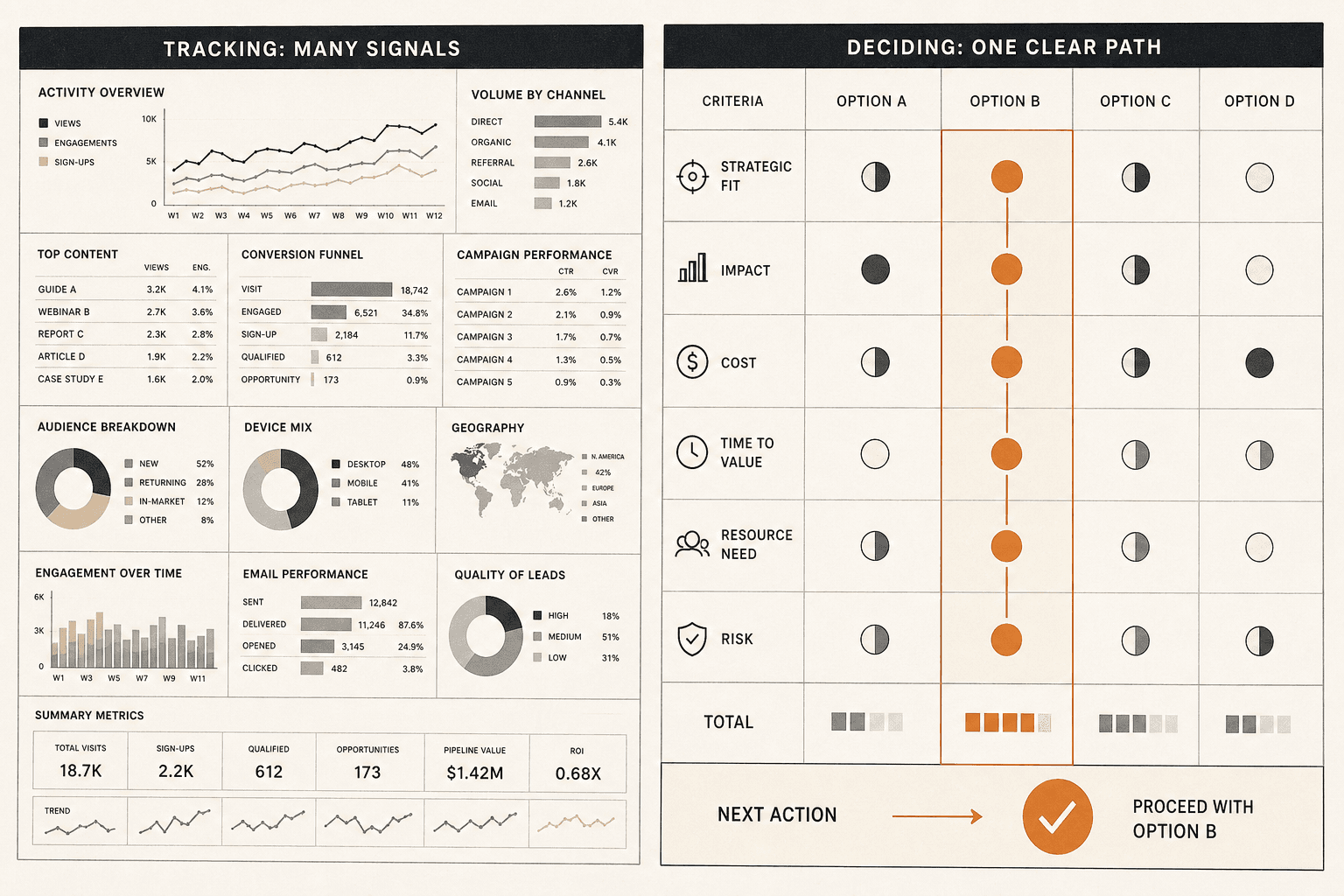
Decision making does not improve because a dashboard looks clean. It improves when a team knows what to do next, why it matters now, and what happens if they wait. That is the gap most reporting stacks still ignore. They summarize performance. They rarely drive action. We have seen this firsthand across SEO, content, and growth workflows. Teams open dashboards, nod at the charts, then go back to Slack asking the same question: so what should we do? That delay is expensive. It slows campaigns, hides priorities, and turns reporting into a weekly ritual instead of a growth system. In this piece, we argue that dashboard design is broken when it stops at data visualization. We share what we built, why we built it, and how we use action-led seo reporting to support faster decisions for in-house teams and founders. We also break down the current state of reporting, the pushback we hear, and what leaders should change next if they want dashboards that drive outcomes instead of just attention.

Mygom Seo
Mygom Seo
How to Build a Zero - Spreadsheet SEO Workflow
Article

How to Build a Zero - Spreadsheet SEO Workflow

SEO teams do not need more spreadsheets. They need cleaner systems. If you are still copying rankings into sheets, checking pages by hand, and building reports manually, your process is slowing down growth. That is where seo automation helps. It replaces repetitive SEO work with connected workflows for tracking, monitoring, publishing, and reporting. In this guide, you will set up a practical automation stack your team can actually use. You will start with the tools, access, and rules you need. Then you will automate rank tracking and site checks, connect publishing and alerts, and build reporting that updates without constant manual work. Each step ends with a measurable result, so you can confirm the process is working before moving on. By the end, you should have a lean system that gives your team faster visibility, fewer errors, and more time to focus on strategy instead of admin.

Mygom Seo
Mygom Seo
8 Signs Your SEO Tool Stack Is Creating Work Instead of Saving It
Article

8 Signs Your SEO Tool Stack Is Creating Work Instead of Saving It

SEO teams rarely buy too few tools. They buy one more crawler, one more dashboard, one more writing assistant, and one more scheduler. Then the stack starts fighting itself. Data stops matching. Alerts pile up. Publishing gets delayed. Nobody owns the full workflow. That is tool sprawl, and it quietly drains output before teams notice the cost. This listicle breaks down the clearest symptoms that an SEO stack is doing more harm than help. Instead of comparing endless software features, it evaluates the operational warning signs that matter most: data consistency, workflow continuity, signal quality, publishing speed, and team ownership. Readers will see how duplicate data, disconnected workflows, alert fatigue, manual publishing gaps, and shadow processes show up inside real marketing teams. The goal is simple: help teams spot where their seo tools are creating friction, compare what healthy systems look like, and decide when a leaner seo automation platform or the best all in one seo tool makes more sense.

Mygom Seo
Mygom Seo
Technical SEO Alerts: Which Issues Need Same - Day Action—and Which Can Wait
Article

Technical SEO Alerts: Which Issues Need Same - Day Action—and Which Can Wait

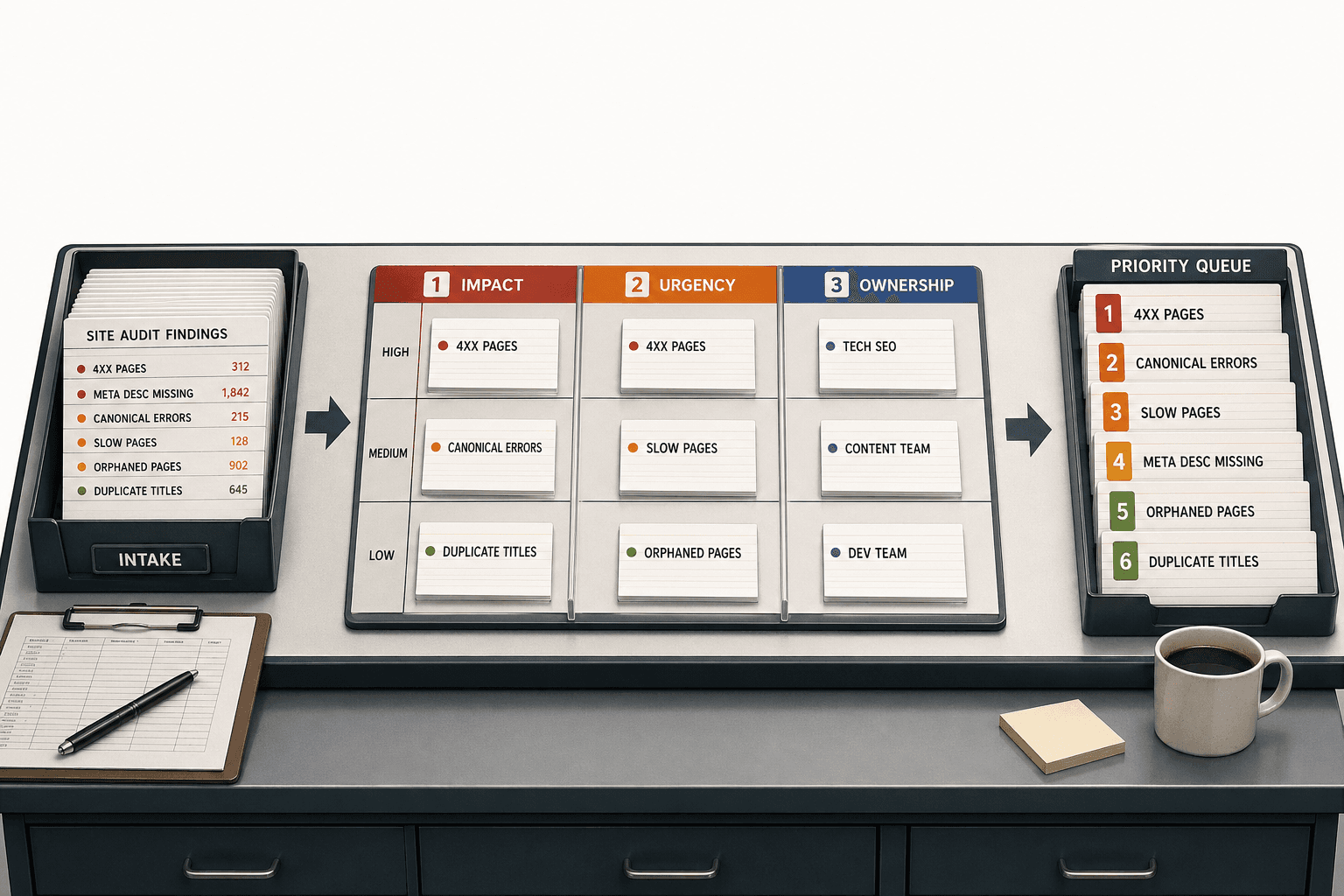
A site audit tool should not turn every issue into a fire drill. But that is exactly what happens when teams get flooded with warnings, vague severity labels, and no clear response rules. You end up chasing noise, missing real risks, and wasting time on low-impact fixes. This tutorial shows you how to build a practical prioritization framework around a site audit tool so your team knows what matters now, what can wait, and what to ignore. You will start with a simple alert inventory, then add severity scoring, business impact rules, ownership, escalation paths, testing, and rollout steps. Along the way, you will learn how to use 24/7 monitoring, technical SEO monitoring, and smarter SEO alerts without overwhelming your team. The goal is simple. Fewer false alarms. Faster decisions. Better SEO operations.

Mygom Seo
Mygom Seo
7 SEO Tasks Founders Should Automate Before Hiring a Bigger Team
Article

7 SEO Tasks Founders Should Automate Before Hiring a Bigger Team

Small business SEO gets expensive fast when founders and lean teams try to do everything by hand. The problem is not effort. It is task selection. Some SEO work is low risk and highly repeatable, which makes it perfect for automation. Other work still needs a human brain because one wrong shortcut can create thin content, brand damage, or messy site structure. This listicle shows the 11 SEO and content tasks that are safest and most valuable to automate first. Each pick is ranked using the same lens: impact on traffic, time saved, setup difficulty, quality control risk, and how useful it is for early-stage SaaS teams with limited headcount. The goal is simple. Help founders automate the boring parts first, keep humans on strategy, and avoid the common trap of over-automating too early. Readers will get a clear shortlist, a side-by-side comparison, and a fast verdict on what to automate now versus later.

Mygom Seo
Mygom Seo
How to Turn One Keyword Into a Blog Post, Social Thread, and CMS Draft in a Single Workflow
Article

How to Turn One Keyword Into a Blog Post, Social Thread, and CMS Draft in a Single Workflow

Social media automation sounds simple until you try to connect strategy, writing, approvals, scheduling, and publishing in one clean workflow. Most teams still do it manually. That means wasted time, inconsistent posting, and way too much copy-pasting between tools. In this tutorial, you’ll build a practical system that starts with one keyword and turns it into a multi-channel content engine. You’ll map the workflow, create reusable content inputs, use an ai social media manager to speed up drafts, add content repurposing rules for each channel, and connect cms publishing so your blog and social posts stay aligned. You’ll also learn how to test the workflow before it goes live, avoid common automation mistakes, and ship a setup your team can actually maintain. The goal is not more tools. It’s less busywork and faster publishing. By the end, you’ll have a working social media automation process you can reuse every time a new keyword enters your content pipeline.

Mygom Seo
Mygom Seo