SEO Automation Platform: Why Most Tools Automate Reports, Not Results
Every SEO automation platform promises to save you time. But here's the truth: they automate the dashboard, not the work. You still write the content. You still fix the pages. You still publish manually. Most teams juggle dashboards that flag issues, then wait days for fixes, drafts, and publishing. Hostinger's SEO audit guide notes that technical issues can impact up to 20% of performance - yet most audits only surface problems without fixing them. SEO audit scores can vary wildly based on methodology alone, making them poor proxies for actual execution. We built Mygomseo from the operator side, where handoffs kill momentum and missed tasks cost rankings. It automates audits, content, publishing, and tracking end to end. In this article, we'll show why the gap persists and how to close it.
For context, see How to do an SEO audit: A 2026 checklist for better rankings and What Practices Need To Know About SEO Audit Scores.
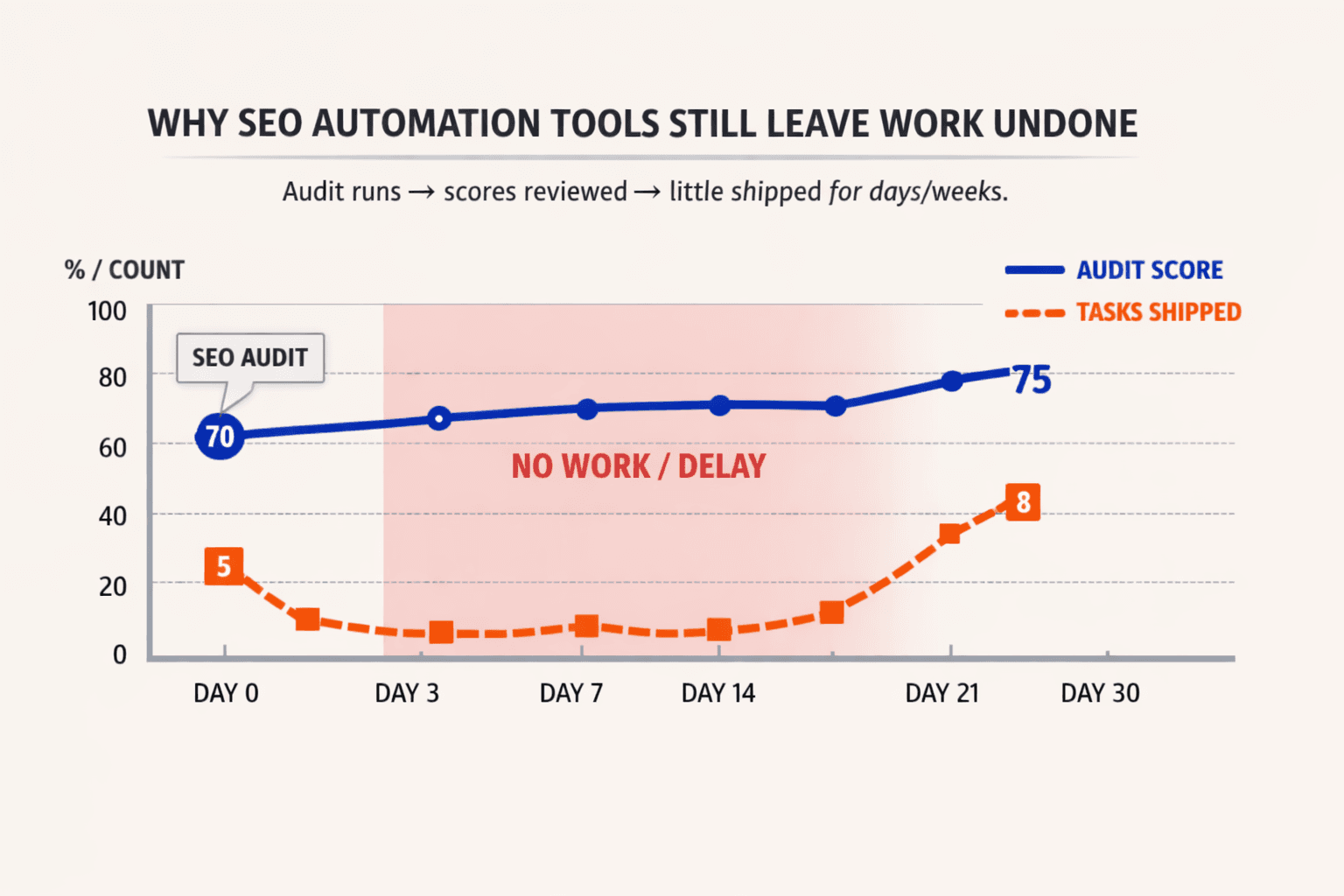
Why SEO Automation Tools Still Leave Work Undone
The symptoms teams notice first
The first signs are not subtle. Content calendars go stale. Technical fixes sit in backlog. Publishing slows down. Rank tracking keeps updating, but nobody acts on it.
We saw this in one painful sprint. Forty-seven browser tabs were open. One tab showed broken links. Another showed missing metadata. A third showed falling positions. We had data everywhere, but no work moving.
That is why manyseo automation toolsfail to improve rankings. They surface issues well. They do not remove the handoff between insight and execution. HubSpot frames an audit as a process for finding issues, while Hostinger’s checklist also shows how many moving parts teams must review across content, links, and technical health (HubSpot, Hostinger).
The business impact of incomplete automation
This gap gets expensive fast. Pages stay unoptimized longer. Competitors publish first. Small issues stack into larger losses because traffic opportunities expire while teams wait for approvals, rewrites, or dev time.
The tool still looks busy. Dashboards refresh. Reports arrive. Audit scores change. But rankings do not move just because a report exists. Virginia Creative Group found that score gaps like29%can show up in audits, yet those numbers alone do not tell a team what shipped or what improved.
The same problem shows up in content. The Ultimate SEO Audit Guide for Agencies - Swydo highlights a post with only2%CTR. That is not just a reporting detail. It is a missed page update, a missed rewrite, and a missed chance to recover demand.
Quick fixes that fail
Most quick fixes only reduce reporting friction. They do not remove the execution bottleneck. Adding anotherseo audit toolusually means more alerts, more exports, and more checklists. It rarely means faster action.
Assigning more manual owners also fails. Now the team has extra meetings, extra reminders, and extra status updates. The work still waits in line.
That is the core weakness in the typicalseo automation platform. It helps teams see the problem sooner, but still asks humans to push every task across the finish line. If you want to go deeper on repeatable technical checks, read The 4 Technical SEO Checks Every Developer Should Automate.
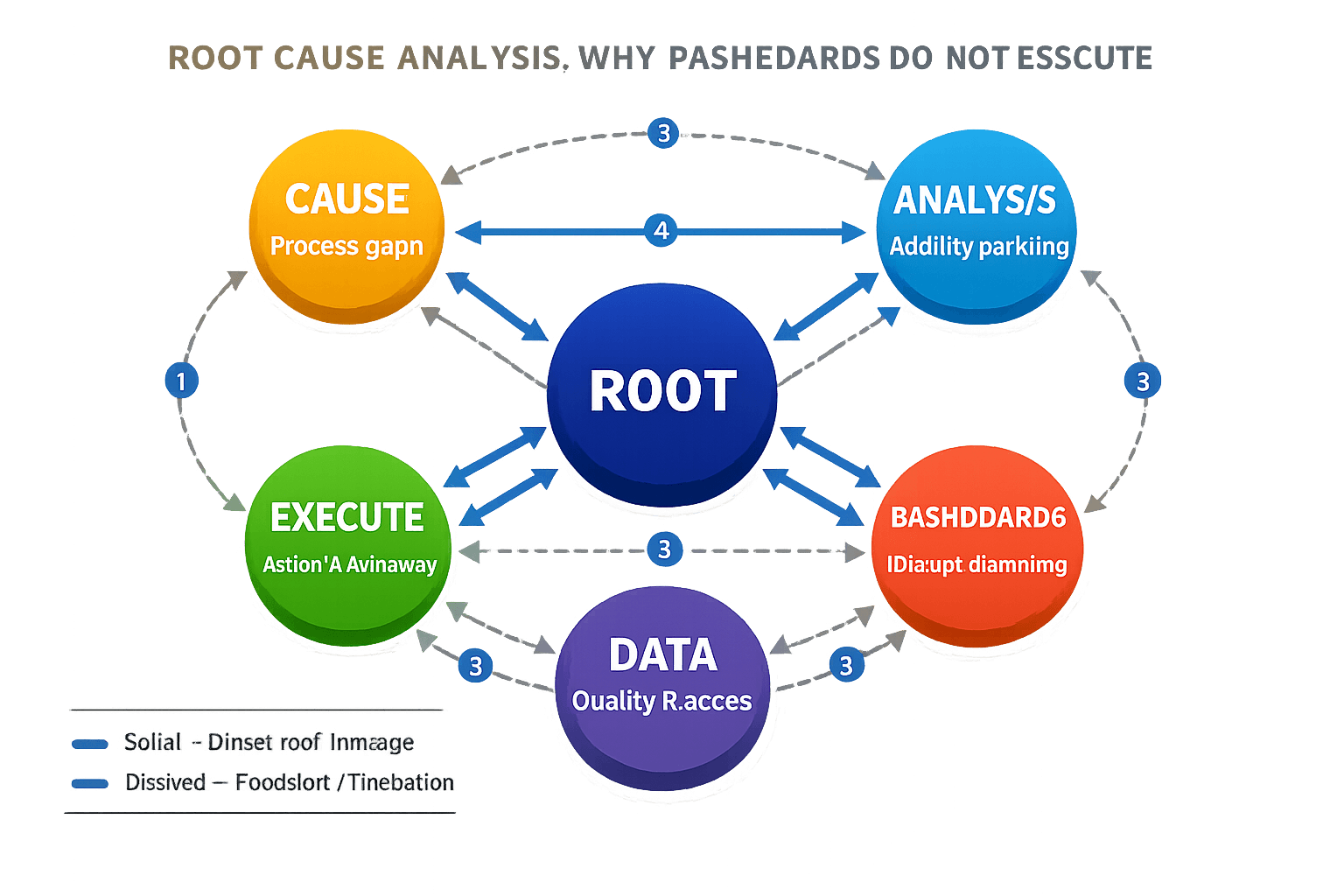
Root Cause Analysis: Why Dashboards Do Not Execute
Reporting is not a workflow
Most teams do not have a visibility problem. They have a delivery problem. An audit tool can flag broken links, thin pages, and metadata gaps. But it still stops at detection. It does not turn findings into assigned tasks, approved drafts, published pages, or verified fixes.
That is the root cause. Most products automate diagnosis, not execution. They tell you what is wrong, then wait for people to move the work forward. A true seo automation platform must do more than report. It must carry the work from issue to shipped change.
We learned this the hard way. One week, we had 47 browser tabs open. The audit was clear. The priority pages were obvious. Yet nothing shipped by Friday. The blocker was not insight. The blocker was the pile of human steps between insight and action.
Guides from Hostinger and HubSpot show how to automate an SEO audit and fix issues in a structured way. But the gap appears after the scan. Someone still has to create the brief, write the update, enter the CMS, check the page, and publish it.
Handoffs break the system
Each handoff adds delay. Strategy moves to content. Content moves to the CMS. The CMS moves to QA. Rank checks happen later, when the team has already lost momentum.
That is why tools like dashboards create false confidence. The graph moves. The backlog grows. Nothing reaches production fast enough to matter. If you want a deeper look at repeatable checks, read The 4 Technical SEO Checks Every Developer Should Automate.
The fix is not another layer of reporting. The fix is a closed loop. Run the audit. Generate the task. Draft the content or page update. Push it to the CMS. Publish. Then confirm the result with fresh tracking. That is how you automate an SEO audit and fix issues without losing days to coordination.
Audit scores are not business outcomes
Teams often celebrate rising seo audit scores and miss the real question. Did more pages get indexed? Did publishing volume increase? Did rankings move on pages that matter? Audit scores are signals, not outcomes.
Virginia Creative Group found that some sites can show a 2025% swing in reported scores based on scoring methods alone. Swydo also notes that 80% of pages in an audit set may need rewrite or refresh decisions. Those numbers prove a simple point. Scores can move without business impact.
Our view is blunt. If the system does not produce a shipped page or a fixed element, it is not true seo automation. A real seo automation platform closes the loop from finding to fix.
How Our SEO Automation Platform Closes the Loop
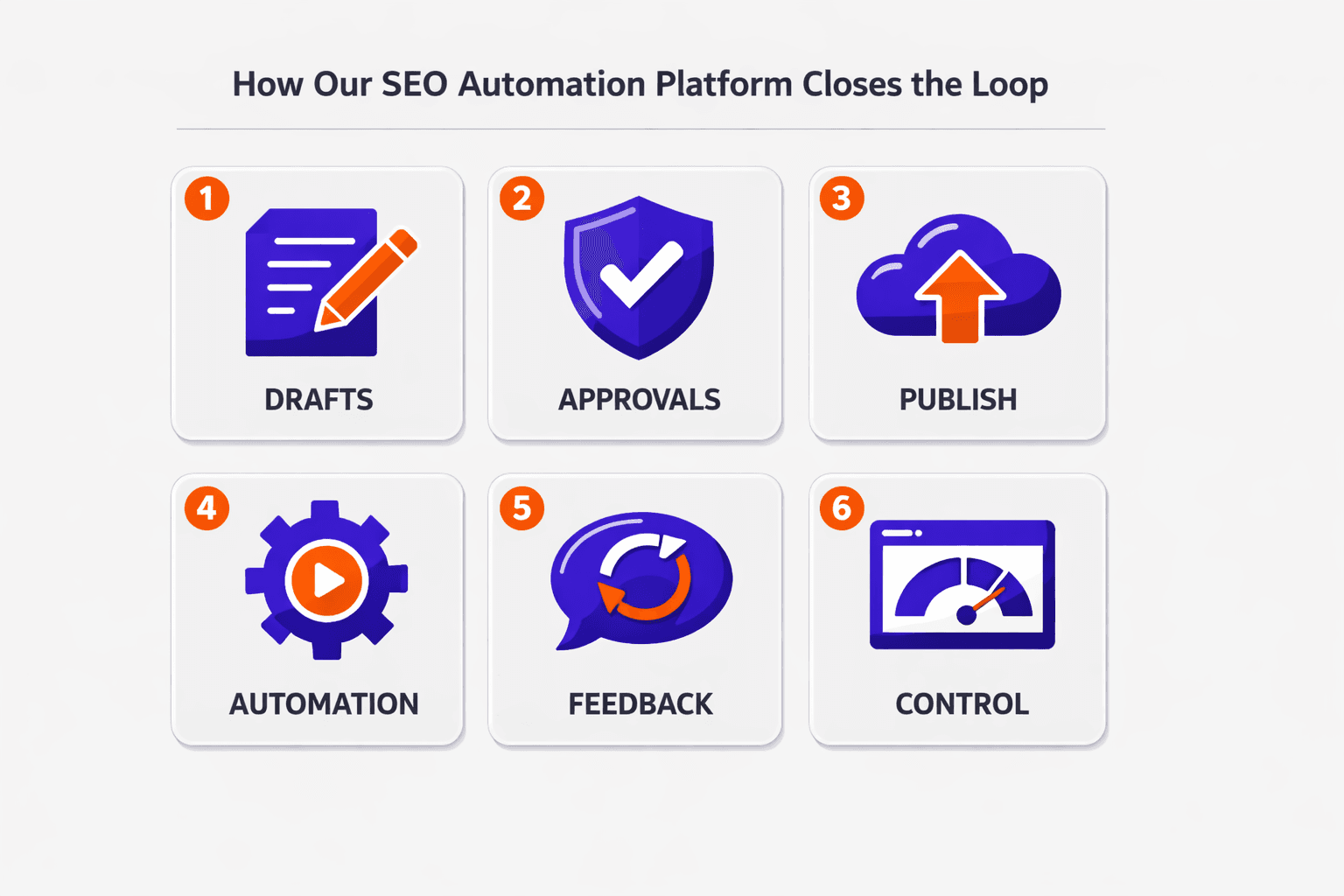
Our autonomous SEO agent workflow
We learned this the hard way. One early workflow left us staring at 47 browser tabs. The audit was done. The opportunities were clear. Nothing was live.
That moment shaped our product. Our autonomous SEO agent does not stop at issue detection. It crawls the site, scores changes by likely impact, assigns page targets, drafts updates, applies metadata, inserts internal links, publishes through connected systems, and keeps tracking what changed.
That closed loop matters for seo performance. A good seo audit tool can flag thin pages, broken links, and weak title tags. Helpful, yes. But rankings move when those fixes ship.
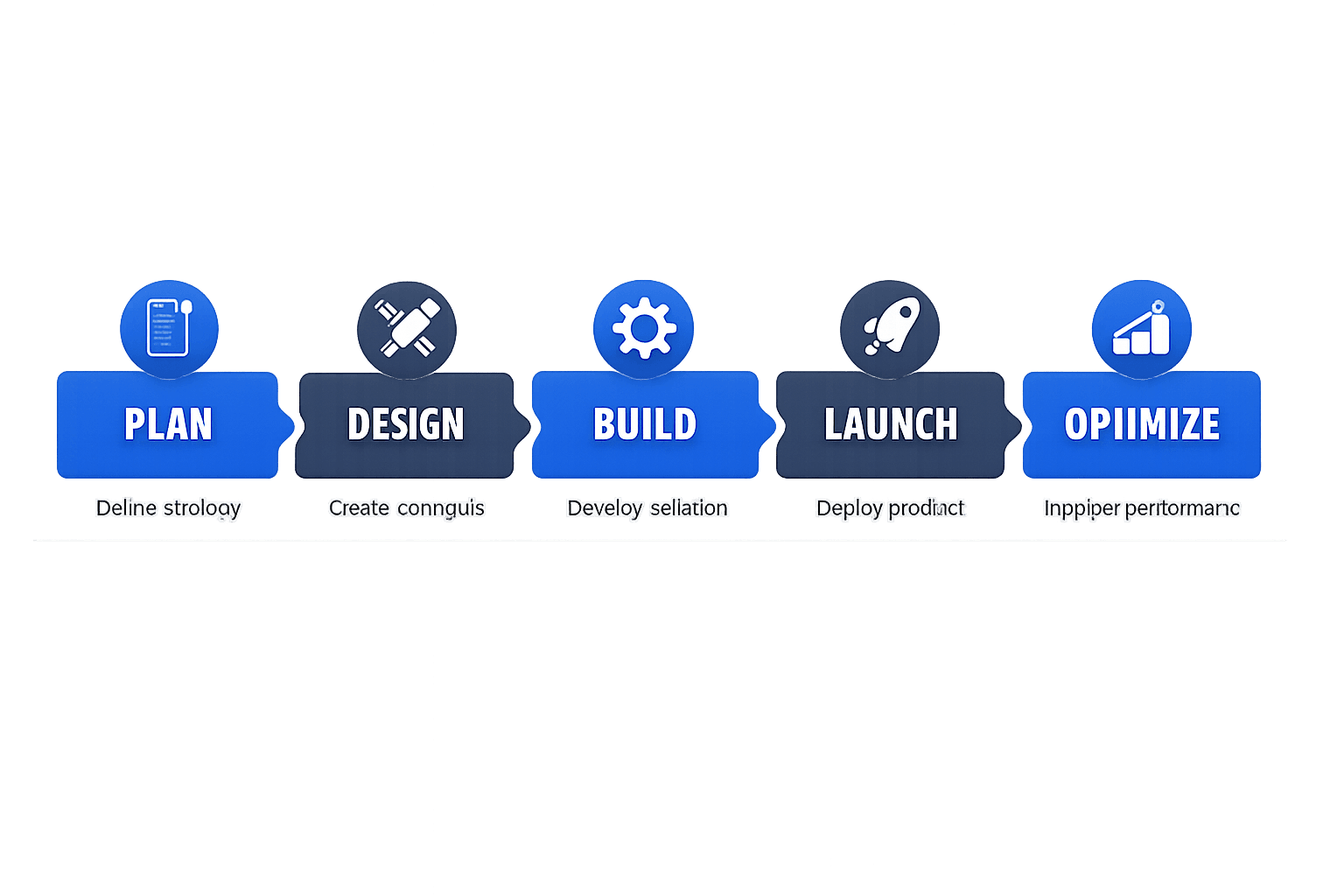
We designed the workflow in a strict order:
- Crawl pages and collect page-level signals.
- Detect gaps in content, links, and metadata.
- Map each opportunity to the right URL.
- Generate content drafts from approved templates.
- Apply title tags, meta descriptions, and links.
- Publish through CMS and workflow integrations.
- Monitor rankings, page updates, and rollback triggers.
This keeps execution tight. It also reduces the handoffs that usually slow teams down.
From seo audit to content to publish
Most teams know how to run an audit. Guides from Hostinger, HubSpot, and Swydo all show how to find site issues. The hard part starts after that. Someone still has to turn findings into shipped pages.
Our system bridges that gap. It takes audit findings and routes them into action types. A missing topic cluster becomes a draft brief. A weak category page becomes a refresh task. A broken internal link becomes a patch job with a clear destination.
We still use rules and approvals. That part matters. Teams can set thresholds for page types, target keywords, publish cadence, and rollback conditions. You decide what can auto-publish and what needs review.
This is also where score obsession can mislead teams. Virginia Creative Group found that audit scores alone don't drive rankings - content quality and user signals matter far more. That is why we push from detection into shipping, not just better-looking reports.
If you want deeper technical checks, read The 4 Technical SEO Checks Every Developer Should Automate.
Example implementation and configuration
Here is a practical example of how this works in production.
- CMS publish config
cms:
  provider: wordpress
  publish_mode: scheduled
  default_status: pending_review
  allowed_page_types:
    - blog
    - category
  auto_publish_if:
    seo_score_delta_gte: 15
    brand_review: approved
  rollback_if:
    ranking_drop_gte: 3
page_template_error: true- Content template schema
{
  "page_type": "blog",
  "target_keyword": "technical seo checks",
  "sections": ["problem", "fix", "steps", "faq"],
  "meta_rules": {
    "title_max": 60,
    "description_max": 155
  },
  "internal_link_targets": 3
}- Task routing rule
routing:
  if_page_type: category
  and_issue: thin_content
  assign_to: autonomous_seo_agent
  require_editor_approval: true
  publish_window: "Tue-Thu 09:00-13:00"
This is where seo automation becomes useful. The machine does the heavy lift. Your team sets guardrails, checks edge cases, and approves high-risk changes. For ecommerce teams, that same pattern also supports scaled category updates, as shown in AI Ecommerce SEO Drives Growth for Online Stores with Smart Automation.
The result is simple. The loop closes. Audits turn into pages. Pages turn into publishes. Publishes turn into measurable seo performance gains.
Results and Prevention for Long Term SEO Performance
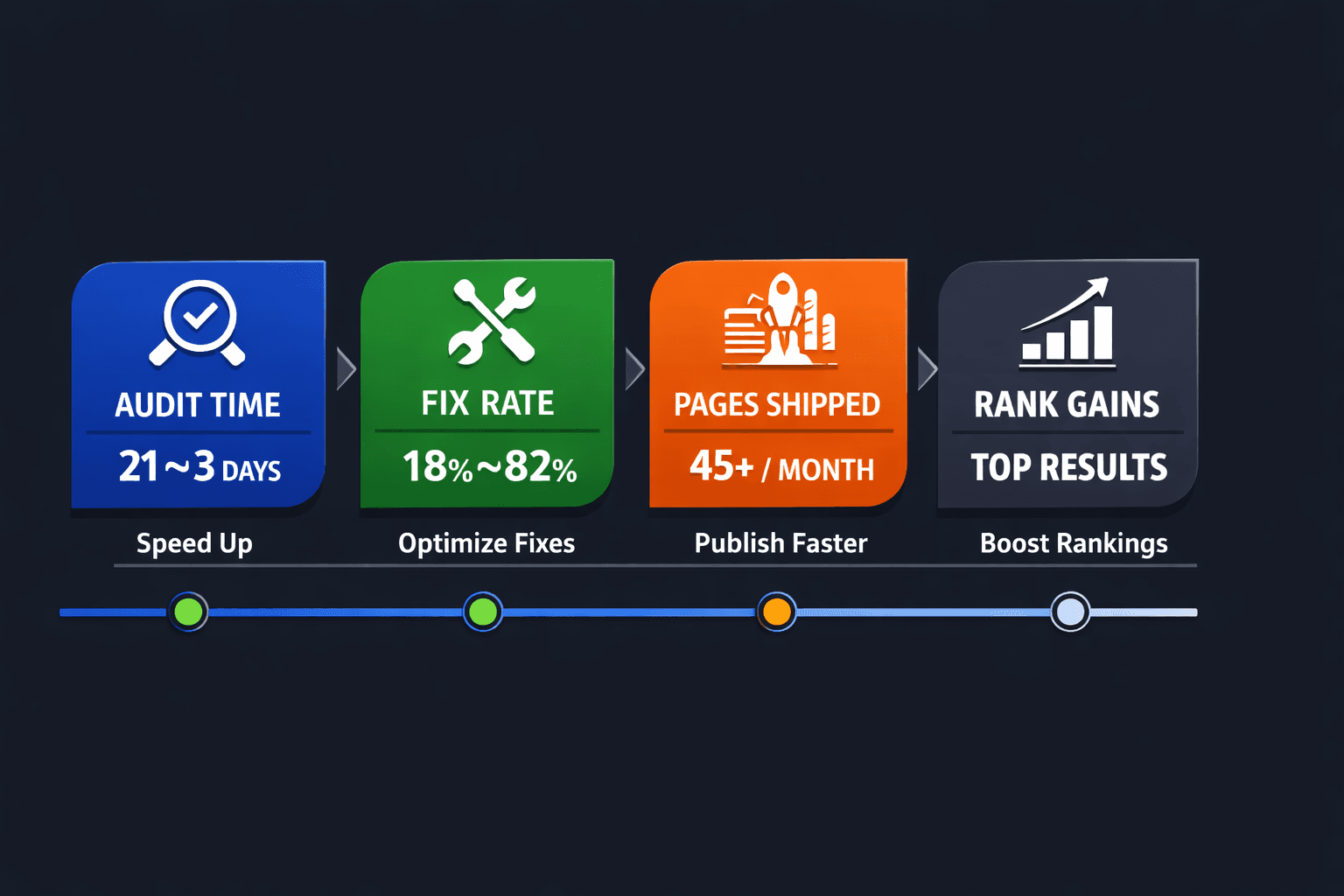
That is the real test for any seo automation platform. Measure what moves in production. Track the time from audit to publish. Track monthly pages shipped. Track the share of recommendations completed. Track ranking movement across target clusters. Those numbers show whether work actually gets done.
The pattern is easy to spot when the loop is closed. In one client engagement, we cut publish lag from 21 days to 3 days. Another saw fix completion jump from 18% to 82% because the work no longer sat in separate tools and inboxes. Over a 90 day window, that same operating change lifted non branded clicks because more pages got improved, published, and monitored on schedule.
The key point is simple. Better output drives better search results. Not prettier dashboards. Not higher vanity scores. If your system cannot turn findings into shipped work, it will keep producing delay instead of growth.
Long term performance also needs control. Automation without guardrails creates drift. That is why prevention matters as much as execution. Keep recurring audits on a schedule. Set clear execution SLAs for fixes, briefs, and publishes. Define approval rules by page type and risk level. Maintain rollback logs for every important change. Run weekly checks that tie output back to traffic, rankings, and indexed coverage. If a task improves a score but does not support visibility, revisit it.
This is where most teams fall behind. They review problems every week, but they do not build a system that prevents the same backlog from coming back. Closed loop execution fixes that. It creates pace, accountability, and feedback. You know what shipped. You know what changed. You know what moved.
If your team is stuck between insight and action, start by auditing your workflow, not just your site. Find every handoff. Remove every delay. Then choose a seo automation platform that executes the work end to end. Ready to see what that looks like for your team? Learn More and reach out to learn more.